Things to Do After Arriving in the UK as a Student (Complete Guide)
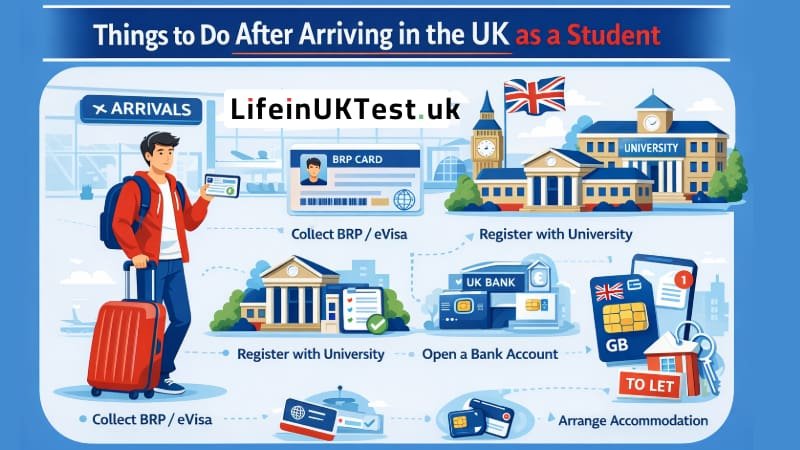
To ensure a smooth transition into your academic life, this guide outlines the things to do after arriving in the UK as a student, covering everything from registration to setting up a bank account.
Landing in the UK with your student visa is genuinely thrilling—you’ve worked hard to get here! But once you step off that plane, there’s quite a bit to sort out. Don’t worry though; thousands of international students go through this every year, and with the right guidance, you’ll settle in smoothly.
I’ve put together this guide based on what students actually need to know (not just the official stuff that sounds confusing). Let’s walk through everything step by step.
1 – Getting Through UK Airport Immigration
What Actually Happens at the Airport?
Your first interaction with the UK will be at border control. You’ll either use an eGate (those automated machines) if you’re eligible, or you’ll queue up to speak with a border officer. With the new eVisa system, your visa is digitally linked to your passport, making entry smoother than ever.
Keep These Documents in Your Hand Luggage
Don’t pack these in your checked bag—you’ll need them immediately:
- Your passport (with your eVisa linked to it)
- CAS letter from your university
- Your official offer letter
- Details of where you’re staying in the UK
- Financial proof (they don’t always ask, but better safe than sorry)
- TB test results if your country requires it
- Your UKVI account details and any share codes (if requested)
Quick tip: Keep these in a folder or envelope so you’re not fumbling around when you reach the desk. The officers appreciate it when you’re organized.
Major UK Airport Links
| Airport | Website |
|---|---|
| Heathrow | www.heathrow.com |
| Gatwick | www.gatwickairport.com |
| Manchester | www.manchesterairport.co.uk |
| Edinburgh | www.edinburghairport.com |
| UK Border Force Info | www.gov.uk/border-control |
2 – Understanding Your UK eVisa 📰
What Is an eVisa?
As of 2025, the UK uses a fully digital immigration system. Your student visa is now an eVisa—an electronic record of your immigration status linked directly to your passport. No more physical cards to collect or worry about losing!
Setting Up Your UKVI Account (Crucial!)
If you applied for your visa after July 15, 2025: You should have received instructions to create your UKVI account before traveling. This is absolutely essential—do it before you fly to the UK.
If you got a 90-day vignette (sticker) in your passport: You applied before mid-July 2025. You still need to set up your UKVI account to access your full eVisa, which shows your complete visa duration beyond those 90 days.
How to Access Your eVisa
- Visit the official government portal for eVisas
- Use your visa application reference number or passport details
- Create secure login credentials with two-factor authentication
- Verify your immigration status is displayed correctly
- Keep your login details safe—you’ll need them throughout your stay
Generating Share Codes
Your eVisa uses share codes to let other people verify your immigration status:
- ‘S’ codes for your university
- ‘R’ codes for landlords (renting accommodation)
- ‘W’ codes for employers
These codes expire after a set time and can be generated whenever you need them through your UKVI account.
Official eVisa Resources
| Service | Website |
|---|---|
| Access Your eVisa | www.gov.uk/view-prove-immigration-status |
| eVisa Information | www.gov.uk/guidance/online-immigration-status-evisa |
| Get Help with eVisa | Use the eVisa webchat service on gov.uk |
Important: If you change your passport, you MUST update your UKVI account with your new passport details. Do this well before any travel to avoid issues at the border.
3 – Register with Your University (Don’t Skip This!) 🎓
Is This Actually Mandatory?
Yes, absolutely yes. This isn’t optional paperwork—it’s what officially confirms you’re studying and keeps your visa valid. The Home Office checks with universities, and if you’re not registered, they’ll assume you’re not studying.
How Registration Usually Works
Most universities do it in two parts:
- Online registration – Fill out forms through your student portal
- In-person enrolment – Show up with your documents for verification
You’ll need to bring:
- Passport
- Access to your UKVI account (to generate a share code)
- Original qualification certificates
- Sometimes your financial documents
They’ll verify everything, snap a photo for your student ID, and activate your account. This gives you access to the library, computer systems, and your student email.
Why This Step Matters So Much
Beyond visa compliance, registration:
- Confirms your student status for council tax exemption
- Activates university support services
- Gets you access to academic resources
- Lets you actually attend classes (obviously important!)
Personal advice: Go early during registration week. The queues get ridiculous toward the end, and you don’t want to be stressed about deadlines.
4 – Police Registration (If It Applies to You) 👮
Do You Need to Register?
Not everyone does. Check your visa decision letter—if it says “Police Registration Required,” then yes, you must do this.
This requirement typically applies to students from specific countries, and it’s based on Home Office policy, not anything personal.
The Details
- Deadline: 7 days after arrival or getting your address
- How: Book online with your local police force
- Cost: Around £34 (cash only at some locations)
- What to bring: Passport, access to your eVisa, two photos, proof of address
Don’t Ignore This
Skipping police registration can result in a £5,000 fine and serious visa complications. It’s a pain, but it’s necessary.
| Resource | Link |
|---|---|
| Official Guidance | www.gov.uk/register-with-the-police |
| London Registration | www.met.police.uk |
5 – Getting Your Accommodation Sorted 🏠
University Halls vs Private Renting
University accommodation is usually the easier option for your first year. Bills are often included, and you’re living with other students. Plus, getting your council tax exemption is simpler.
Private accommodation gives you more freedom but comes with more responsibility—you’ll sign a tenancy agreement, set up utilities, and deal with landlords or letting agents directly.
Council Tax: The Student Exemption
Here’s something many students don’t realize—you don’t have to pay council tax if you’re a full-time student. But exemption isn’t automatic.
What to do:
- Request a council tax exemption certificate from your university (usually free)
- Submit it to your local council
- Keep the confirmation email
If you’re in shared accommodation with non-students, things get more complicated, but your university can advise you.
Keep Everyone Updated on Your Address
Tell your university about your address within 7 days of moving. Some visa conditions also require updating UKVI through your online account.
| Resource | Link |
|---|---|
| Council Tax Information | www.gov.uk/council-tax/who-has-to-pay |
| Update UKVI Account | www.gov.uk/update-uk-visas-immigration-account-details |
6 – Opening a UK Bank Account 💳
Yes, International Students Can Have UK Bank Accounts
Having a British bank account makes life significantly easier. You can pay rent, receive wages, and avoid international transaction fees.
What Banks Typically Ask For
- Valid passport
- Access to your eVisa (you’ll generate a ‘W’ share code)
- Letter from your university (confirming you’re a student)
- UK address proof
Most universities provide bank letters specifically for this purpose—just ask your student services.
Which Bank Should You Choose?
| Bank | Type | Website |
|---|---|---|
| Barclays | Traditional Branch | www.barclays.co.uk |
| HSBC | Traditional Branch | www.hsbc.co.uk |
| Lloyds | Traditional Branch | www.lloydsbank.com |
| NatWest | Traditional Branch | www.natwest.com |
| Monzo | Digital App-Based | www.monzo.com |
| Revolut | Digital App-Based | www.revolut.com |
| Starling Bank | Digital App-Based | www.starlingbank.com |
Traditional banks have physical branches where you can speak to someone in person. Good if you prefer face-to-face banking.
Digital banks are app-based, super quick to set up, and popular with students. Some people use both—a traditional bank for main finances and a digital one for daily spending.
7 – NHS Registration and Healthcare 🏥
Healthcare Access for Students
If you paid the Immigration Health Surcharge (IHS) when applying for your visa—and you definitely did—you can access the NHS for free. This is genuinely one of the best things about studying in the UK.
Register with a GP (General Practitioner)
A GP is your local doctor for routine healthcare. Registration is simple:
- Find a GP surgery near where you live
- Register either online through their website or in person
- Bring your passport, address proof, and access to your eVisa
- You’ll get an NHS number
Why register immediately? Even if you’re healthy now, you’ll need a GP if you get sick, need prescriptions, or require medical letters. Waiting until you’re ill means delays in getting care.
What’s Free and What Isn’t
- Free: GP appointments, hospital treatment, emergency care
- Charged: Prescriptions (£9.90 per item in England), dental work, eye tests and glasses
Emergency Numbers You Should Know
- 999: Life-threatening emergencies
- 111: Non-emergency medical advice (24/7)
- GP: Routine appointments and health concerns
| Healthcare Resource | Link |
|---|---|
| Find Your Local GP | www.nhs.uk/service-search/find-a-gp |
| NHS Homepage | www.nhs.uk |
| GP Registration Guide | www.nhs.uk/nhs-services/gps/how-to-register-with-a-gp-surgery |
8 – Understanding Student Work Restrictions 👩💻
The 20-Hour Rule
Your student visa lets you work, but with clear limits. During term time, you can work up to 20 hours per week. During holidays (summer, Christmas, Easter breaks), you can work full-time.
| Study Period | Work Limit | Details |
|---|---|---|
| Term Time | 20 hours weekly | When classes are running |
| University Holidays | Unlimited hours | Official university break periods |
Check your eVisa—it’ll show your exact work conditions and any restrictions.
What Jobs Are Off-Limits?
Student visas prohibit:
- Self-employment and freelancing
- Starting a business
- Professional sports or entertainment work
- Permanent full-time jobs
You CAN work part-time in retail, hospitality, tutoring, campus jobs, and internships related to your studies.
Seriously, Don’t Break the Work Rules
Working more than 20 hours during term time isn’t worth it. Students have been deported for this. Universities monitor, employers can report it, and UKVI does check.
If you’re unsure about a job offer, ask your university’s international student advisor.
| Resource | Link |
|---|---|
| Official Work Rules | www.gov.uk/student-visa/work-and-study |
9 – Getting Your National Insurance Number 🧾
What’s a National Insurance Number?
Think of it like a social security number. It’s a unique identifier that tracks your tax and national insurance contributions. You need one to work legally in the UK.
When Should You Apply?
Before you start working. However, you CAN begin working before receiving it—just tell your employer you’ve applied. They’ll use a temporary reference until your NIN arrives.
Application Process
- Apply online at the official government website
- Provide identity documents (passport and eVisa access)
- Proof of your UK address
- Evidence of your right to work
- Wait for processing (can take up to 16 weeks)
You’ll receive your NIN by post. Keep the letter safe—you’ll need this number for every job you have in the UK.
| Resource | Link |
|---|---|
| NIN Application | www.gov.uk/apply-national-insurance-number |
| Find Lost NIN | www.gov.uk/lost-national-insurance-number |
10 – Daily Essentials Setup 🛍️
Get a UK Phone Number
You’ll need a British mobile number for everything—banking, deliveries, university contact, job applications. Most students get a pay-as-you-go SIM initially, then switch to contracts once they have a bank account.
| Mobile Provider | Type | Website |
|---|---|---|
| EE | Contract & PAYG | www.ee.co.uk |
| O2 | Contract & PAYG | www.o2.co.uk |
| Vodafone | Contract & PAYG | www.vodafone.co.uk |
| Three | Contract & PAYG | www.three.co.uk |
| Giffgaff | PAYG (Budget) | www.giffgaff.com |
| Lebara | PAYG (International calls) | www.lebara.com |
Transport Cards
In London: Get an Oyster Card or just use contactless payment on trains and buses. Visit www.tfl.gov.uk for details.
Outside London: Check your city’s transport website for local travel cards.
Student railcard: The 16-25 Railcard saves you 1/3 on train fares—worth getting if you travel at all. Get it at www.16-25railcard.co.uk.
Student Discounts (Get These!)
| Discount Service | What It Does | Website |
|---|---|---|
| TOTUM (NUS Card) | High street & online discounts | www.totum.com |
| UNiDAYS | Loads of online student deals | www.myunidays.com |
| Student Beans | More exclusive discounts | www.studentbeans.com |
Pro tip: Always ask “Do you do student discount?” before paying. Many places offer it but don’t advertise it.
Where to Shop for Groceries
| Supermarket | Price Range | Website |
|---|---|---|
| Tesco | Mid-range | www.tesco.com |
| Sainsbury’s | Mid-range | www.sainsburys.co.uk |
| Asda | Budget-friendly | www.asda.com |
| Lidl | Budget | www.lidl.co.uk |
| Aldi | Budget | www.aldi.co.uk |
| Morrisons | Mid-range | www.morrisons.com |
| Waitrose | Higher-end | www.waitrose.com |
Student budget tip: Aldi and Lidl are brilliant for keeping costs down. Tesco and Sainsbury’s have more variety. Most students shop at a mix depending on what they need.
11 – Staying Visa-Compliant (This Is Critical) ⚠️
Mistakes That Can Get Your Visa Cancelled
Let’s be real—visa rules aren’t suggestions. Breaking them has serious consequences, including deportation and bans on returning to the UK. Here’s what you must do to stay compliant.
Attendance Matters More Than You Think
Universities track attendance and report to the Home Office. If you’re consistently absent without valid reasons, your university must inform UKVI, and your visa can be revoked.
Most courses require at least 80% attendance. Missing classes because you’re tired or unmotivated isn’t acceptable—only genuine illness or emergencies count.
Update Your Address Immediately
Moved house? Tell your university within 7 days. You must also update your UKVI account with your new address.
This seems minor, but the Home Office needs to know where you are. Failing to update can cause problems with visa extensions.
Report Any Course Changes
Switching courses, changing universities, withdrawing, or taking a break? Your university MUST report these to UKVI within 10 working days. These changes can affect your visa status, so discuss with your international student advisor before making decisions.
Know When Your Visa Expires
This sounds obvious, but students sometimes lose track. Your eVisa shows your exact end date. If you need to extend (for further study) or switch to a work visa, apply at least 3 months before it expires.
Overstaying—even by a day—creates serious problems and can result in a 10-year ban.
Working Beyond Your Hours
I mentioned this earlier, but it’s worth repeating: don’t exceed 20 hours during term time. The consequences aren’t worth the extra money.
Keep Your UKVI Account Secure
Your eVisa account is now your immigration document. Keep your login details safe, enable two-factor authentication, and never share your password. If you lose access, contact UKVI support immediately.
| Compliance Resource | Link |
|---|---|
| Student Visa Rules | www.gov.uk/student-visa/stay-in-uk |
| Extend Your Visa | www.gov.uk/extend-visa |
| Switch Visa Type | www.gov.uk/switch-visa |
12 – Practical Tips for UK Student Life 🌍
The Famous British Weather
People joke about UK weather for good reason—it’s genuinely unpredictable. You might experience sun, rain, and wind all in one day.
What to pack:
- A good waterproof jacket (you’ll wear it constantly)
- Umbrella (get a sturdy one; cheap ones break in the wind)
- Layers—temperatures vary wildly
- Warm coat for winter (October through March can be quite cold)
Classroom Culture Differences
UK education emphasizes critical thinking and participation. You’re expected to question ideas, debate respectfully, and form your own opinions—not just memorize facts.
- Speak up in seminars and tutorials
- It’s okay to disagree with lecturers (politely)
- Punctuality is expected
- Address staff as they prefer (some want Dr./Professor, others are fine with first names)
Academic Integrity Is Taken Seriously
Plagiarism, cheating, and buying essays will get you expelled and your visa cancelled. UK universities use sophisticated software to detect copied work.
Always cite sources properly and do your own work. If you’re struggling, talk to your tutors or use academic support services—that’s what they’re there for.
Mental Health Support
University can be challenging, especially far from home. Feeling homesick, stressed, or overwhelmed is completely normal.
Every university offers:
- Free counseling services
- International student advisors
- Academic skills support
- Wellbeing workshops
- Financial advice
- Disability and accessibility services
These services are confidential. Using them isn’t a sign of weakness—it shows you’re being proactive about your wellbeing.
Your Quick Reference Checklist ✔️
Print this out or save it on your phone:
- ✅ Pass through immigration with all documents ready
- ✅ Set up UKVI account and verify eVisa access (before arrival if possible)
- ✅ Register with university (do this FIRST!)
- ✅ Complete police registration if required (within 7 days)
- ✅ Confirm and settle into accommodation
- ✅ Get council tax exemption certificate
- ✅ Open UK bank account (you’ll need an eVisa share code)
- ✅ Register with local GP surgery
- ✅ Apply for National Insurance Number if working
- ✅ Get UK mobile number
- ✅ Understand your visa work restrictions
- ✅ Sort out student discount cards
- ✅ Familiarize yourself with university support
- ✅ Keep UKVI account updated with current information
❓ Questions Students Actually Ask
Do I still need a physical document for my visa?
No! Since 2025, the UK uses a fully digital system. Your visa is an eVisa stored electronically and linked to your passport. You’ll access it through your UKVI online account. There are no more physical BRP cards or collection requirements.
How do I prove my immigration status to my university or employer?
Through your UKVI account, you’ll generate share codes. These are temporary codes that let universities, employers, or landlords verify your status. The codes expire after a set time (usually 30 or 90 days), so you generate new ones as needed.
What if I change my passport after getting my visa?
You MUST update your UKVI account with your new passport details immediately. Your eVisa is linked to your passport, so failing to update will cause serious problems at the UK border. Update well before any travel.
Do I really need to register with the police?
Only if your visa decision letter explicitly says so. Check your visa documents—it’ll clearly state “Police Registration Required” if applicable. This typically applies to students from specific countries based on Home Office requirements. You must register within 7 days.
Can I start working right away?
Technically yes, within your visa conditions (20 hours during term). However, I’d recommend getting your NIN application submitted first. You can work while it’s processing, but having it sorted early prevents payroll issues.
Is healthcare actually free?
Yes, if you paid the Immigration Health Surcharge with your visa application—which you did. GP visits, hospital treatment, and A&E are free. You’ll pay for prescriptions (£9.90 each in England), dental work, and optician services.
Do I actually have to pay council tax?
Not if you’re a full-time student. But exemption isn’t automatic—you must get a certificate from your university and submit it to your local council. Do this even if you live in university accommodation, just to be safe.
What if I can’t attend classes for a while?
Inform your university immediately with medical certificates or valid documentation. Extended absences need to be officially recorded. Just not showing up can trigger visa compliance issues.
What happens if I lose access to my UKVI account?
Contact UKVI support immediately through the eVisa webchat or helpline. Your UKVI account is now your immigration document, so losing access is serious. Keep your login details secure and enable two-factor authentication.
What if I decide to leave my course early?
Speak to your university immediately. They’re required to report withdrawals to UKVI, which will typically curtail (shorten) your visa. You’ll usually have 60 days to leave the UK or switch to another visa category.
Final Thoughts
Getting settled in the UK involves quite a lot of admin, but take it step by step and you’ll be fine. Thousands of international students navigate this successfully every year.
The most important things? Set up your UKVI account immediately, register with your university as soon as possible, respect your visa conditions, and don’t hesitate to ask for help. Your university’s international office exists specifically to support you through these processes.
The digital eVisa system actually makes things easier once you’re used to it—no physical cards to lose, instant share codes for verification, and the ability to update your details online. Just keep your account secure and your information current.
Remember, being organized in your first few weeks makes the rest of your UK experience much smoother. Once you’ve ticked off these essentials, you can properly focus on why you came here—your studies and enjoying this incredible opportunity.
Welcome to the UK, and best of luck with everything! 🎓🇬🇧