What to do after passing the life in the UK Test. – So you’ve just walked out of the test centre clutching that pass notification letter, probably feeling a mix of relief and excitement. Congratulations! You’ve cleared one of the significant hurdles on your journey to making the UK your permanent home. But here’s the thing—passing the test is just one piece of the puzzle. What comes next is equally important, and honestly, knowing what to expect can save you months of stress and confusion.
What to Do After Passing the Life in the UK Test: Your Complete 2026 Guide
Let me walk you through everything you need to know about what happens after you pass that test, updated for 2026 with all the latest changes and practical tips from people who’ve been exactly where you are now.
Understanding Your Pass Notification: This Letter Is Gold
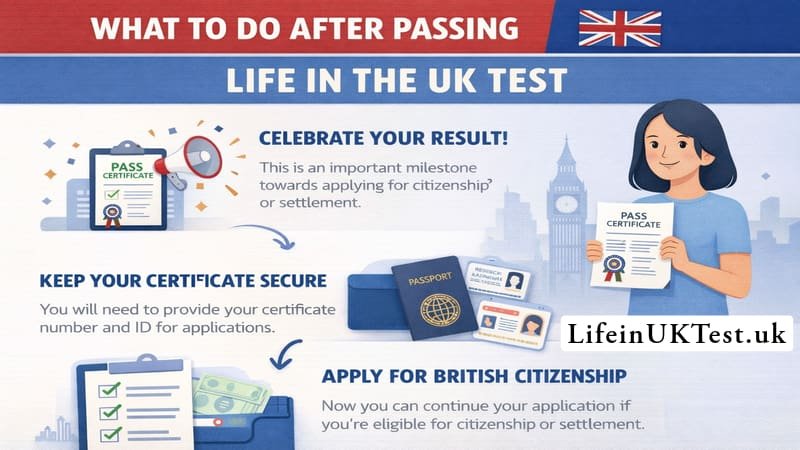
The moment you pass, you’ll receive a printed pass notification letter that you need to sign before leaving the test centre. This isn’t just a congratulatory note—it’s an essential document that the Home Office will need when processing your application for Indefinite Leave to Remain or British citizenship.
Here’s what makes this letter so important:
Your pass notification contains a Unique Reference Number that the Home Office uses to verify your test results. Without this URN, your application journey becomes significantly more complicated. The Home Office doesn’t issue replacements if you lose this letter. Yes, you read that right—there are no do-overs with this document.
Store this letter somewhere safe, ideally with your other immigration documents. Some people scan it and keep a digital backup (which is smart), but you’ll need the original for your application. Your pass certificate remains valid indefinitely, which is genuinely reassuring—there’s no expiry date hanging over your head.
If disaster strikes and you’ve genuinely lost your pass notification, contact the Home Office immediately on 0300 123 2253. They’ll advise you on the next steps, though it typically involves explaining the situation in writing with your citizenship or settlement application.
The Two Main Pathways Forward
After passing the Life in the UK test, your next destination depends on your current immigration status and long-term goals. Most people fall into one of two categories.
Pathway 1: Indefinite Leave to Remain (ILR)
ILR, sometimes called settlement or permanent residence, grants you the right to live, work, and study in the UK without time restrictions. It’s the stepping stone to British citizenship and provides genuine peace of mind after years of visa renewals and uncertain status.
Who qualifies for ILR?
The qualifying routes vary, but most people reach ILR through one of these paths:
Work visa holders on routes like Skilled Worker visas typically qualify after five years of continuous residence. Some high earners on accelerated provisions may qualify earlier—if you’ve earned at least £125,140 in taxable income for three consecutive years, you might be eligible in just three years under proposed 2026 changes.
Family members, including spouses and partners of UK citizens or settled persons, can apply after either three years (on the 2-year route) or five years (on the 5-year route), depending on when they entered the UK.
Long residence applicants who’ve lived lawfully in the UK for ten continuous years may qualify regardless of their visa category history. This route has traditionally been a safety net for people who’ve switched between different visa types but maintained lawful status throughout.
Ancestry visa holders and certain other specialized routes also lead to settlement after meeting their respective residence requirements.
Important 2026 Update: Proposed Changes to ILR
I need to level with you here—significant changes to ILR are on the horizon. The UK government announced in their 2025 White Paper plans to implement an “earned settlement” model, potentially doubling the standard timeline from five to ten years for most routes. A public consultation on these changes runs until 12 February 2026, with implementation possibly beginning in spring 2026.
What this means in practice:
The government proposes a baseline qualifying period of ten years, which could be reduced based on contributions to UK society. High earners might qualify in three years, while those in medium-skilled roles could wait up to fifteen years. The criteria would assess character, integration, contribution, and immigration compliance.
English language requirements would increase from B1 to B2 level for settlement applications. Financial requirements would tighten, requiring personal income of at least £12,570 maintained for three to five years before applying.
Dependants would no longer automatically qualify alongside main applicants—adult dependants must meet their own qualifying periods and criteria.
What should you do? If you’re currently on a five-year route to settlement and close to qualifying under current rules, seriously consider applying before these changes take effect. The Home Secretary indicated that new rules would apply to everyone not yet holding ILR, though transitional arrangements might be considered for “borderline cases.”
ILR Application Process in 2026
Applying for ILR requires careful preparation. The current application fee stands at £3,029 per person, which is non-refundable if your application is refused due to errors or missing documents.
You’ll need to gather comprehensive evidence proving:
Continuous lawful residence for the required period, with absences not exceeding 180 days in any 12-month period for most routes. Your pass notification from the Life in the UK test showing your URN. English language qualification at B1 level minimum, though this may increase to B2 under proposed changes. Valid passport and travel documents covering your entire residence period. Proof of financial stability meeting route-specific requirements. Evidence of accommodation throughout your qualifying period.
The processing time typically ranges from three to six months for straightforward cases, though complex applications or those requiring additional checks can extend beyond six months. Priority services are available—standard processing runs 8 weeks to 6 months, priority service aims for 5 working days, and super priority targets next working day decisions, though these carry additional fees.
You must apply before your current leave expires but not more than 28 days beforehand, or your application faces automatic refusal.
Pathway 2: British Citizenship (Naturalisation)
British citizenship represents the final step in your immigration journey. Unlike ILR, which keeps you in immigration status requiring renewal every ten years, citizenship makes you legally British with all associated rights and no further immigration requirements.
Who qualifies for citizenship?
Most applicants qualify through naturalisation, which typically requires:
Holding ILR or settled status for at least 12 months before applying. Five years of residence in the UK before receiving ILR (three years if married to a British citizen). Not exceeding absence limits during your residence—maximum 450 days over five years (270 days over three years for spouse route), with no more than 90 days in the final year. Being 18 or over and of good character. Passing the Life in the UK test and meeting English language requirements at B1 level.
The good character requirement deserves special attention because it’s surprisingly strict. The Home Office assesses whether you’ve respected UK laws and fulfilled immigration obligations. This includes reviewing:
Criminal convictions, including spent convictions in some cases. Immigration history, including any overstays or deception. Financial conduct, including tax compliance, bankruptcy history, and benefit fraud. Driving offences, even seemingly minor ones like unpaid parking fines.
Previous immigration refusals on good character grounds can prevent naturalisation for many years, so complete honesty in your application is absolutely crucial.
British Citizenship Application Process
The naturalisation application costs £1,735, which includes the £130 citizenship ceremony fee. This is non-refundable if refused, so getting it right matters enormously.
You’ll complete Form AN (application for naturalisation) online or by post. The online route is generally faster and more reliable. You’ll need to provide:
Your Life in the UK test pass notification with URN. Proof of English language ability at B1 level. Valid passport and previous passports covering your residence period. Biometric Residence Permit if you have one. Two referees who’ve known you for at least three years—one must be a British citizen aged 25 or over, and the other should be a person of professional standing.
After submission, you’ll attend a biometric appointment within a few weeks to provide fingerprints and a photograph. Some applicants also face an interview assessing English language ability and integration into UK society.
Processing typically takes six to eight months from submission to decision, though straightforward cases may conclude in three to four months. Complex cases involving additional checks can extend to twelve months or beyond.
Important timing consideration
Don’t start your citizenship application until you’ve held ILR for at least 12 months. If you’re married to a British citizen, you can apply immediately after receiving ILR, but you still need to meet all other requirements including residence history.
The Citizenship Ceremony: Your Final Step
If your naturalisation application succeeds, the Home Office sends an invitation letter instructing you to book a citizenship ceremony. This is where your journey culminates—you don’t officially become British until you attend this ceremony and receive your naturalisation certificate.
Booking Your Ceremony
You must book and attend your ceremony within three months of receiving the Home Office invitation. If you miss this deadline without Home Office approval for an extension, your approval lapses and you’ll need to reapply and pay the full fee again.
Contact your local authority’s registrar service as soon as you receive your invitation. Ceremonies are typically scheduled within three to eleven weeks, though availability varies significantly by location. Urban areas with high application volumes may have longer waiting times.
Types of Ceremonies
Most local authorities offer two options:
Group ceremonies
Group ceremonies are free (included in your application fee) and typically accommodate 20-50 new citizens. They’re held every few weeks, usually lasting 60-90 minutes. You can bring one or two guests, depending on your local authority’s policy.
Private ceremonies
Private ceremonies cost an additional £100-£200 depending on location and allow you to celebrate with up to 10 family members. These can often be arranged within days and last about 15-30 minutes. Some registrars can photograph your private ceremony, adding a personal touch to the occasion.
What Happens at the Ceremony
Citizenship ceremonies follow a formal structure that’s both legal requirement and celebration:
You’ll arrive 30 minutes early for registration, bringing your Home Office invitation letter and valid photo ID. Children under 18 don’t legally need to attend—parents can collect certificates on their behalf.
The superintendent registrar or local dignitary opens with a welcome speech explaining the significance of British citizenship. Then comes the pivotal moment: you’ll make either an Oath of Allegiance (religious form swearing by God) or an Affirmation of Allegiance (secular alternative), followed by the Citizenship Pledge. These words are fixed by law and cannot be changed.
After making your declarations, you’re presented with your Certificate of Naturalisation and a welcome pack. At this moment, you legally become British. The ceremony typically concludes with the national anthem, “God Save the King,” and photo opportunities.
Professional photographers often attend group ceremonies, offering commemorative photos you can purchase afterward. Many people find this a meaningful way to mark the occasion.
After the Ceremony: Immediate Actions
Within five working days of receiving your citizenship certificate, you must return your Biometric Residence Permit to the Home Office. Failing to do this can result in fines up to £1,000.
Send your BRP to: Returns Unit PO Box 195 Bristol BS20 1BT
Keep proof of postage—use recorded or special delivery.
Applying for Your British Passport
With your citizenship certificate in hand, you can now apply for a British passport. This is typically done online through the government’s passport application service.
You’ll need:
A digital photo meeting UK passport photo standards. Your naturalisation certificate (you’ll need to send the original). Details from your current passport if you have one. Payment of £94.50 for a standard adult passport.
The digital photo must be validated by someone who can confirm your identity—typically a professional like a doctor, teacher, or lawyer who’s known you for at least two years and holds a British passport.
After submission, you may be invited to an identity verification interview, increasingly conducted online. These interviews are straightforward if your application is genuine—they simply confirm you are who you claim to be.
Processing typically takes three to six weeks for standard applications. Once approved, your new passport arrives by courier or recorded delivery, and you’re free to travel as a British citizen with visa-free access to over 190 countries.
Three Application Routes to Consider
When applying for citizenship or ILR, you have several options for submitting your application:
1. Individual Application (DIY Route)
You can complete and submit everything yourself directly to the Home Office. This is the most economical option but requires meticulous attention to detail. The immigration forms are notoriously complex, and even small errors can lead to costly refusals.
This route works best if you’re confident in understanding immigration rules, have straightforward circumstances, and can dedicate time to thorough preparation and documentation gathering.
2. National Checking Service (NCS)
Many local authorities offer NCS, which provides a halfway option between DIY and full legal representation. NCS staff check your application for completeness and accuracy before submission. They verify your identity documents, make certified copies, and help ensure you’ve included everything required.
NCS typically costs £70-£150 and can significantly reduce rejection risk due to simple errors. They’ll review your forms, check your supporting documents, and often submit your application on your behalf. However, they cannot provide immigration advice about eligibility or complex situations.
3. Immigration Solicitor
For complex cases or if you’re uncertain about any aspect of your application, professional legal advice can be invaluable. Immigration solicitors charge £500-£2,000 for citizenship applications but provide comprehensive support including:
Eligibility assessment and strategic advice. Complete application preparation and form completion. Document review and organization. Liaison with the Home Office throughout the process. Representation if issues arise.
This route makes particular sense if you have previous immigration refusals, criminal convictions, long periods of absence, gaps in documentation, or any uncertainty about meeting the good character requirement.
Common Mistakes to Avoid
Having guided many people through this process, I’ve seen certain errors repeatedly cause problems:
Rushing the application. Take time to gather all documents properly. Missing or incorrect documents are the number one cause of refusals, and you lose your entire fee when applications are rejected.
Underestimating absence calculations. The Home Office counts absences precisely. Be meticulous when calculating days spent outside the UK. Even being off by a few days can trigger refusal.
Assuming the Life in the UK test is enough. You still need a separate English language qualification at B1 level unless you’re exempt. Your test pass doesn’t cover this requirement.
Failing to declare everything. The good character assessment is thorough. Undeclared convictions, parking fines, or tax issues discovered during processing can result in refusal and accusations of deception, damaging future applications.
Waiting too long to apply. With proposed changes potentially extending ILR timelines from five to ten years, delaying your application could mean additional years before qualifying under new rules.
Not keeping copies. Always photograph or scan every document before submitting originals. The Home Office occasionally loses documents, and without copies, you’re stuck.
Traveling during processing. Leaving the UK while your ILR application is pending can lead to automatic withdrawal. While citizenship applicants can travel (you must hold valid immigration status), you need to be available for the ceremony within three months of approval.
Understanding Processing Times and Checking Status
Patience becomes essential during the processing period. Standard timelines are:
ILR applications: 3-6 months for standard service, though complex cases extend longer.
Citizenship applications: 6-8 months on average, with straightforward cases sometimes resolving in 3-4 months and complex situations taking up to 12 months.
You can check your application status by contacting UK Visas and Immigration on 0300 790 6268. They won’t be able to speed things up, but can confirm your application is actively being processed and hasn’t stalled.
If your case significantly exceeds standard processing times, consider consulting an immigration solicitor who can make formal inquiries with the Home Office on your behalf.
Financial Planning: The True Cost
Let’s be completely transparent about costs, because these applications aren’t cheap:
| Item | Cost |
|---|---|
| Life in the UK Test | £50 |
| English Language Test (if needed) | £200-£300 |
| Police Clearance Certificates | £15-£50 per country |
| ILR Application Fee | £3,029 per person |
| OR Citizenship Application Fee | £1,735 (includes ceremony) |
| Private Citizenship Ceremony (optional) | £100-£200 |
| Biometric Appointment | £19.20 |
| British Passport | £94.50 |
| Priority Processing (if desired) | Variable, up to £500+ |
| Legal Advice (if needed) | £500-£2,000 |
For a family of four applying for citizenship after ILR, you’re looking at total costs exceeding £10,000 across the entire journey. Plan accordingly and start saving early.
Staying Informed About Proposed Changes
The immigration landscape is shifting significantly in 2026. Here’s what you need to monitor:
The consultation on earned settlement changes closes 12 February 2026. The government aims to begin implementing new rules from April 2026, though exact timelines remain unclear.
Key proposed changes include:
Extended qualifying periods from five to ten years for most ILR routes. Higher English language requirements (B2 instead of B1). Stricter financial requirements (£12,570 minimum income for 3-5 years). Contribution-based assessment considering employment sector, community involvement, and skills. Separate qualifying requirements for dependants.
The Life in the UK test itself may be modernized, though no revised handbook has been published as of January 2026. Continue using current official materials until formal updates appear on GOV.UK.
Practical Tips from People Who’ve Been There
Start organizing early. Create a dedicated folder (physical and digital) for all immigration documents from day one. Future applications will be much easier.
Document everything. Keep evidence of residence, employment, travel—everything. Council tax bills, bank statements, utility bills, P60s, payslips. The Home Office may request any of these.
Track your absences religiously. Maintain a spreadsheet noting every departure and return date with supporting evidence. When application time comes, this will be invaluable.
Get ahead on English tests. If you need an English language qualification, take it early. Tests can be scheduled months out in busy periods.
Build your referee relationships. Start identifying potential referees well before you need them. The relationship requirement is three years.
Consider professional advice for complex situations. If anything in your history is remotely complicated—previous refusals, criminal issues, long absences—consultation fees are worth avoiding costly refusals.
Join online communities. Forums and social media groups for UK immigration applicants share real-time experiences, processing times, and practical tips.
Your Timeline: What to Expect Month by Month
Here’s a realistic timeline for most applicants:
Immediately after passing: Secure your pass notification safely. Continue building your residence evidence and maintaining your qualifying status.
3-6 months before qualifying: Begin detailed application preparation. Verify all documents are in order. Calculate absences precisely. Arrange English language testing if needed. Identify and approach referees.
1 month before qualifying: Complete your application form. Gather all supporting documents. Have everything reviewed by NCS or solicitor if using these services. Book biometric appointment.
Application submission: Apply no more than 28 days before completing your qualifying period. Pay fees. Attend biometrics within scheduled timeframe.
Processing period (3-8 months): Wait. Check status periodically but avoid excessive calls to Home Office. Keep your address updated. Don’t travel if applying for ILR.
Decision received: If approved for citizenship, book ceremony immediately. If approved for ILR, celebrate and plan citizenship application timeline.
Within 3 months of approval: Attend citizenship ceremony, return BRP within 5 days, apply for passport.
The Bottom Line
Passing the Life in the UK test is genuinely worth celebrating—you’ve cleared a significant hurdle. But it’s one step in a longer journey toward permanent settlement or citizenship. What comes next requires careful planning, attention to detail, and patience.
With proposed changes potentially extending settlement timelines dramatically, anyone currently on a five-year route should seriously consider applying under existing rules if they’re close to qualifying. The difference between five and ten years is substantial, particularly when it affects your entire family’s future.
The application process is expensive, time-consuming, and unforgiving of errors. But thousands of people successfully navigate it every year. With thorough preparation, accurate documentation, and realistic expectations about timelines, you can too.
Your pass notification letter is now one of your most important documents. Guard it carefully, plan your next steps strategically, and don’t hesitate to seek professional advice if your situation is anything other than completely straightforward.
The UK has become your home. These applications are simply the paperwork to make that official. Take it seriously, give it the time and attention it deserves, and before you know it, you’ll be standing in a citizenship ceremony making your oath of allegiance and receiving your certificate.
Best of luck on the rest of your journey. You’ve got this.
Useful Resources
| Resource | Link |
|---|---|
| Official Government Citizenship Guidance | https://www.gov.uk/british-citizenship |
| ILR Application Information | https://www.gov.uk/settle-in-the-uk |
| Book Life in the UK Test | https://www.lituktestbooking.co.uk/ |
| Immigration Rules | https://www.gov.uk/guidance/immigration-rules |
| Find Immigration Advice | https://www.gov.uk/find-an-immigration-adviser |
| Contact UK Visas and Immigration | 0300 790 6268 |
| Life in the UK Test Helpline | 0800 015 4245 |
| Home Office Citizenship Enquiries | citizenship.support@homeoffice.gov.uk |
Disclaimer: This article provides general guidance based on information available in January 2026. Immigration rules change frequently, and individual circumstances vary significantly. Always verify current requirements on GOV.UK before submitting applications, and consider professional immigration advice for complex situations.