Preparing for the Life in the UK Test can feel overwhelming, especially when candidates encounter questions designed to test more than just basic knowledge. Many test-takers lose marks not because they don’t study, but because some questions are deliberately tricky in their wording or options. In this article, “10 Common Tricky Questions in the Life in the UK Test and How to Solve Them,” we break down the most confusing questions candidates often face, explain why they are misleading, and share clear strategies to answer them correctly. Whether you are applying for British citizenship or indefinite leave to remain (ILR), this guide will help you avoid common mistakes, boost your confidence, and improve your chances of passing the Life in the UK Test on your first attempt.
10 Common Tricky Questions in the Life in the UK Test and How to Solve Them
You know that moment when you’re sitting in the test centre, staring at a question about something you swear you revised, but suddenly your mind goes blank? Yeah, we’ve all been there.
The Life in the UK test isn’t impossibly hard, but it’s sneaky. It loves throwing curveballs that catch even well-prepared candidates off guard. After speaking with dozens of people who’ve taken the test (and a few who’ve had to retake it), I’ve noticed the same tricky questions keep popping up.
Let me walk you through the ones that trip people up most often—and more importantly, how to actually remember the answers.
Why These Questions Feel So Unfair
Here’s the thing: the test doesn’t just ask “When did the Battle of Hastings happen?” It’ll phrase it like “Which year did William the Conqueror invade England?” or bury the date inside a longer question about Norman rule. Same information, completely different mental pathway.
The official handbook is dense—packed with dates, percentages, and historical figures that all start blending together after your third read-through. The questions that stump people aren’t necessarily about obscure facts. They’re about details that feel similar to other details, or they test your knowledge from an unexpected angle.
The Questions That Keep Catching People Out
1. Patron Saints and Their Days
This one gets people every single time. The test loves asking which saint belongs to which country, or which date is the correct celebration.
The Question Might Look Like:
- “St David is the patron saint of which country?”
- “When is St Andrew’s Day celebrated?”
Here’s How I Remember It:
Think of it alphabetically and geographically:
- St David = Wales (1 March) – David starts with D, daffodils bloom in early spring
- St Patrick = Northern Ireland (17 March) – The famous Irish celebration everyone knows
- St Andrew = Scotland (30 November) – Last month of the year, furthest north
- St George = England (23 April) – Roses and Shakespeare’s birthday
I once met someone who failed because they mixed up St Andrew and St George. Don’t be that person. Write these down on a sticky note and put it on your bathroom mirror.
2. The Age Requirements for Different Rights
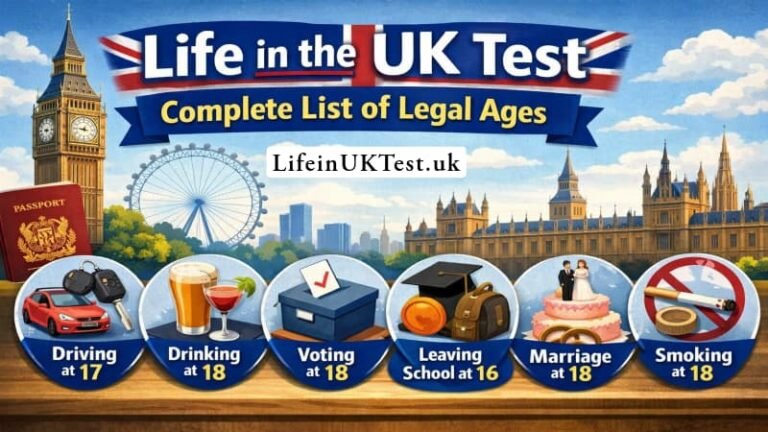
The test loves asking about ages. Problem is, there are different ages for different things, and they’re easy to jumble.
You’ll See Questions Like:
- “At what age can you buy a lottery ticket?”
- “What is the minimum age for jury service?”
The Breakdown:
| Age | What You Can Do |
|---|---|
| 16 | Drink wine/beer with a meal in a restaurant (with an adult), buy a lottery ticket, consent to sexual activity |
| 17 | Drive a car, hold a license to drive most vehicles |
| 18 | Buy alcohol in a pub, vote in elections, stand for public office (with exceptions), serve on a jury |
| 21 | Stand for election to the House of Commons |
The lottery ticket at 16 catches people out constantly because most assume it’s 18. Think of it this way: you can dream about winning millions before you can legally drink at a pub.
3. Which Countries Form the UK vs Great Britain
This seems basic until they word it strangely or ask you to identify what’s not included.
Tricky Question Examples:
- “Which of these is NOT part of Great Britain?”
- “The Crown Dependencies are part of the UK. True or False?”
The Clear Answer:
- Great Britain = England, Scotland, Wales (the big island)
- United Kingdom = England, Scotland, Wales, Northern Ireland
- Crown Dependencies (Jersey, Guernsey, Isle of Man) = NOT part of the UK
- British Isles = Geographic term including Ireland
Northern Ireland is in the UK but not in Great Britain. The Crown Dependencies are self-governing and not part of the UK. I’ve seen so many people miss this because they assume Crown Dependencies must be included.
4. The Role of the Speaker in the House of Commons
They’ll ask about what the Speaker does, and the answers all sound vaguely correct.
Common Question:
- “What is the Speaker’s role in the House of Commons?”
What You Need to Know:
The Speaker is politically neutral (even though they’re an MP), keeps order during debates, represents the House of Commons to the monarch, and is chosen by fellow MPs. They do not represent their political party in the House—they give that up when elected Speaker.
The trick answer often suggests the Speaker leads their party’s MPs. Nope. Once you’re Speaker, you’re everyone’s referee.
5. Bank Holidays Across the UK
This one’s genuinely annoying because different parts of the UK have different bank holidays.
They’ll Ask:
- “Which bank holiday is unique to Scotland?”
- “Do all parts of the UK celebrate the same bank holidays?”
What to Remember:
England, Wales, and Northern Ireland share most bank holidays, but:
- Scotland gets an extra day off on 2 January (the day after New Year’s Day)
- Northern Ireland celebrates St Patrick’s Day (17 March) and Battle of the Boyne (12 July) as bank holidays
- The August bank holiday falls on the first Monday in Scotland but the last Monday in England, Wales, and Northern Ireland
People forget about the August difference especially. If you’re memorizing dates anyway, add these quirks to your list.
6. The Population Percentages and Census Data
Numbers questions are brutal because 63%, 64%, and 65% all look the same when you’re nervous.
Typical Questions:
- “What percentage of the UK population is Christian?”
- “What percentage of the UK population is under 19?”
2021 Census Key Figures (Latest Available):
The 2021 census showed some significant shifts:
- Christianity dropped to around 46% (no longer the majority)
- “No religion” increased to about 37%
- Around 21-22% of the population is under 19
These numbers changed dramatically from the 2011 census. Old study materials might have outdated figures, so make sure your practice tests reflect 2021 data.
The test won’t expect exact decimals, but you need to be in the right ballpark. If an answer says “over 60% are Christian,” that’s wrong based on current data.
7. When Women Got the Vote
This question has layers, and they test all of them.
How They’ll Ask It:
- “When did women get the right to vote on the same terms as men?”
- “In which year could women first vote in UK elections?”
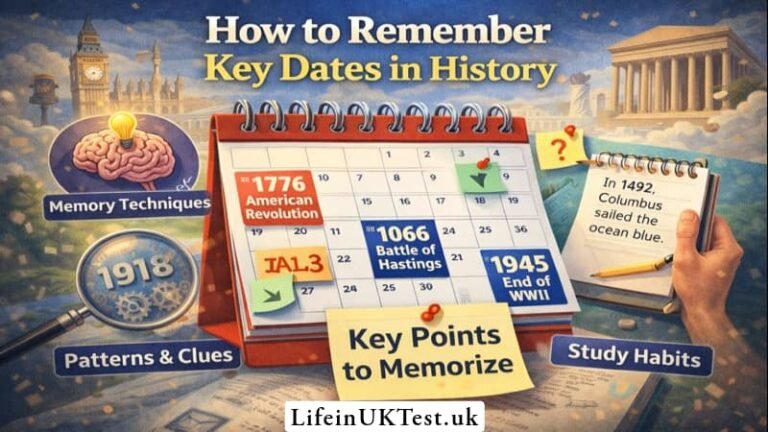
The Timeline:
- 1918 – Women over 30 who met property qualifications could vote
- 1928 – All women over 21 could vote (same as men)
- 1969 – Voting age lowered to 18 for everyone
If the question says “same terms as men,” the answer is 1928, not 1918. That decade difference has failed many people.
8. The Difference Between Civil and Criminal Law
The test asks about this conceptually, and the similar terminology trips people up.
Question Examples:
- “Which court handles serious criminal cases?”
- “What is the standard of proof in civil cases?”
The Key Distinctions:
Criminal Law:
- Prosecution vs defendant
- Standard: “beyond reasonable doubt”
- Serious cases go to Crown Court
- Can result in prison
Civil Law:
- Claimant vs defendant
- Standard: “balance of probabilities”
- County Court for most cases
- Financial compensation typically
“Balance of probabilities” means more likely than not (over 50%). “Beyond reasonable doubt” is a much higher bar. People mix these up constantly.
9. The Wars of the Roses
History questions often focus on this period, and it’s confusing because roses, houses, and battles all blur together.
They Might Ask:
- “Which houses fought in the Wars of the Roses?”
- “Who became king after the Wars of the Roses?”
What Matters:
- House of Lancaster (red rose) vs House of York (white rose)
- Ended in 1485 at the Battle of Bosworth Field
- Henry VII (Lancaster) became king, married Elizabeth of York, united the houses
- The Tudor rose combines red and white
The key detail people forget: Henry VII was from Lancaster but married into York to unite the families. If a question asks about unification, that marriage matters.
10. The Ceremonial Role of the Monarch
Constitutional monarchy is a slippery concept, and questions about what the monarch actually does are designed to confuse.
Tricky Questions:
- “Can the monarch refuse to give Royal Assent to a bill?”
- “Who actually governs the UK?”
The Reality:
In theory, the monarch has powers. In practice, they don’t use them. The monarch:
- Formally appoints the Prime Minister (but it’s always the leader who can command the House of Commons)
- Gives Royal Assent to bills (but hasn’t refused since 1708)
- Opens and dissolves Parliament (on the PM’s advice)
If a question asks who governs, it’s the Prime Minister and Cabinet, not the monarch. If it asks about formal/ceremonial roles, that’s the monarch. Read carefully.
How to Actually Remember All This
Look, I could tell you to read the handbook three times and take practice tests. You already know that. But here’s what actually works:
Make stupid memory tricks. The weirder, the better. “St Andrew’s in November—Andrew starts with A, so does Autumn’s end.” Does it make logical sense? No. Will you remember it? Absolutely.
Write things down by hand. I know, we’re all digital now. But there’s something about physically writing “1928 – women vote equally” that makes it stick in your brain differently than typing it.
Take practice tests in test conditions. Set a 45-minute timer. Sit at a desk. No phone, no notes, no music. The actual test environment is quiet and slightly stressful—practice that feeling.
Focus on what’s different, not what’s the same. Scotland’s August bank holiday being first Monday vs last Monday in England? That difference is what they’ll test. Not that bank holidays exist.
The Week Before Your Test
Stop trying to learn new information. Seriously. A week out, you should be reinforcing what you already know, not cramming in facts about Boudicca for the first time.
Do one practice test every day. Review the ones you get wrong, but don’t spiral into re-reading entire handbook chapters. Target your weak spots.
The night before? Light review only. Read through your handwritten notes, glance at your sticky notes, maybe do ten quick questions. Then stop. Sleep matters more than cramming at this point.
Key Takeaway
The Life in the UK test isn’t testing whether you’re a British history scholar—it’s testing whether you’ve absorbed the cultural and historical basics that the government considers important for residents. The tricky questions aren’t tricky because they’re obscure; they’re tricky because they test details that are easy to confuse or half-remember.
Patron saints, ages for different rights, the census data, and constitutional roles trip people up because the differences are subtle. Master these ten common pitfalls, and you’ll walk into that test centre with genuine confidence instead of just crossing your fingers.
You’ve got this. And if you don’t pass the first time? The person who failed twice before passing is just as much a UK resident as someone who aced it immediately. The test is a hurdle, not a judgment on your worth.
Now go write down those patron saints one more time.