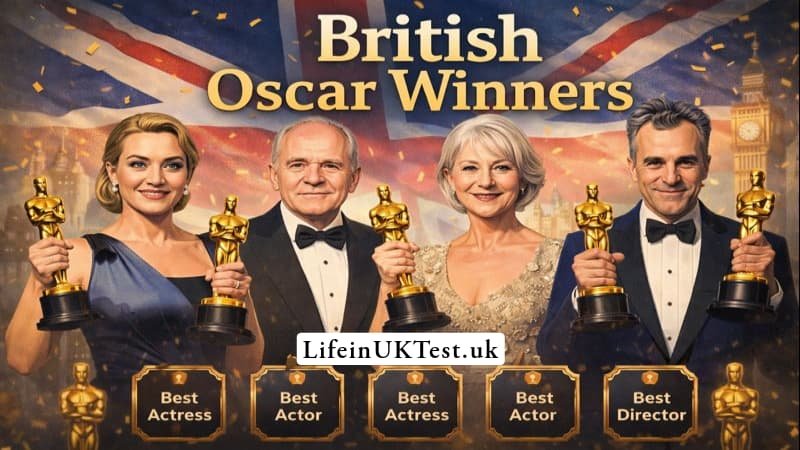
British Oscar Winners – The Life in the UK Test isn’t just about memorizing British Oscar Winners dates. It’s about understanding British contributions to arts and culture. Oscar winners represent Britain’s impact on global cinema, and you’ll want to know the key figures.
Think about it this way: when you watch a major Hollywood film, there’s a good chance British talent is involved somewhere—whether it’s the lead actor, the director, or even the composer.
British Oscar Winners: A Journey Through Cinema History
You know what’s fascinating? Britain has produced some of the world’s most celebrated actors, directors, and filmmakers. When you’re preparing for the Life in the UK Test, understanding British cultural achievements—including Oscar wins—gives you real insight into what makes this country tick.
Let me share something interesting. The first time a British person won an Oscar was back in 1929. Since then, British talent has dominated the Academy Awards in ways that honestly surprise most people.
Notable British Oscar Winners You Should Know
Let’s talk about the people who’ve made history. I’m not going to bore you with every single winner, but here are the ones that matter for your understanding of British culture.
Dame Judi Dench won Best Supporting Actress for Shakespeare in Love (1998). What’s remarkable? She was on screen for just eight minutes. That’s the power of British acting training right there and one of the most fascinating in British Oscar Winners list. You must remember this for life in the UK Test.
Daniel Day-Lewis is the only actor ever to win three Best Actor Oscars. Born in London, he won for My Left Foot (1989), There Will Be Blood (2007), and Lincoln (2012). He’s known for intense method acting—the kind where he stays in character for months.
Kate Winslet finally won Best Actress for The Reader (2008) after several nominations. She’s from Reading, England, and represents that classic British determination.
Colin Firth took home Best Actor for The King’s Speech (2010), playing King George VI. This film is particularly relevant because it shows an important period in British royal history.
Here’s something you might not know: Sir Charlie Chaplin received an Honorary Oscar in 1972. He was born in London and became one of cinema’s most influential figures during the silent film era.
British Directors Making Their Mark
British directors have shaped modern filmmaking. Sir Sam Mendes won Best Director for American Beauty (1999). Danny Boyle won for Slumdog Millionaire (2008)—a film that showcased his distinctive visual style.
Steve McQueen became the first Black British director to win Best Picture for 12 Years a Slave (2013). This was a watershed moment in Academy Awards history.
The Music Behind the Movies
Britain’s musical talent extends to film scores too. Andrew Lloyd Webber won for Best Original Song. The country has produced composers who’ve defined what movies sound like.
Complete British Oscar Winners Timeline
Here’s your reference table for British Oscar Winners. I’ve organized this chronologically so you can see how British talent has consistently appeared at the Oscars over the decades:
| Year | Winner | Category | Film/Achievement |
|---|---|---|---|
| 1929 | Frank Lloyd | Best Director | The Divine Lady |
| 1933 | Charles Laughton | Best Actor | The Private Life of Henry VIII |
| 1939 | Robert Donat | Best Actor | Goodbye, Mr. Chips |
| 1940 | Vivien Leigh | Best Actress | Gone with the Wind |
| 1942 | Greer Garson | Best Actress | Mrs. Miniver |
| 1951 | Vivien Leigh | Best Actress | A Streetcar Named Desire |
| 1957 | Alec Guinness | Best Actor | The Bridge on the River Kwai |
| 1964 | Rex Harrison | Best Actor | My Fair Lady |
| 1966 | Paul Scofield | Best Actor | A Man for All Seasons |
| 1972 | Charlie Chaplin | Honorary Award | Lifetime Achievement |
| 1981 | Chariots of Fire | Best Picture | British Production |
| 1982 | Ben Kingsley | Best Actor | Gandhi |
| 1983 | Gandhi | Best Picture | British-Indian Production |
| 1989 | Daniel Day-Lewis | Best Actor | My Left Foot |
| 1992 | Emma Thompson | Best Actress | Howards End |
| 1993 | Emma Thompson | Best Adapted Screenplay | Sense and Sensibility |
| 1997 | The English Patient | Best Picture | British Production |
| 1998 | Judi Dench | Best Supporting Actress | Shakespeare in Love |
| 1999 | Sam Mendes | Best Director | American Beauty |
| 2001 | Jim Broadbent | Best Supporting Actor | Iris |
| 2005 | Kate Winslet | Best Actress | The Reader |
| 2007 | Helen Mirren | Best Actress | The Queen |
| 2008 | Daniel Day-Lewis | Best Actor | There Will Be Blood |
| 2008 | Tilda Swinton | Best Supporting Actress | Michael Clayton |
| 2009 | Kate Winslet | Best Actress | The Reader |
| 2009 | Danny Boyle | Best Director | Slumdog Millionaire |
| 2011 | Colin Firth | Best Actor | The King’s Speech |
| 2011 | The King’s Speech | Best Picture | British Production |
| 2012 | Meryl Streep | Best Actress | The Iron Lady (playing British PM) |
| 2013 | Daniel Day-Lewis | Best Actor | Lincoln |
| 2014 | 12 Years a Slave | Best Picture | Steve McQueen (British Director) |
| 2015 | Eddie Redmayne | Best Actor | The Theory of Everything |
| 2018 | Gary Oldman | Best Actor | Darkest Hour |
| 2019 | Olivia Colman | Best Actress | The Favourite |
| 2019 | Rami Malek | Best Actor | Bohemian Rhapsody (playing British icon) |
| 2022 | Kenneth Branagh | Best Original Screenplay | Belfast |
| 2023 | Daniel Kaluuya | Best Supporting Actor | Judas and the Black Messiah |
What This Shows About British Culture
Let’s be real here. Britain punches well above its weight in cinema. For a relatively small country, the impact on global film culture is massive. This comes from strong drama schools like RADA (Royal Academy of Dramatic Art), a rich theatrical tradition, and honestly, a culture that values storytelling.
When you’re taking the Life in the UK Test, remember that the arts aren’t separate from British identity—they’re central to it. From Shakespeare to modern cinema, storytelling runs through British culture like letters through a stick of rock.
Recent Trends Worth Noting
Something’s shifted in recent years. British actors of diverse backgrounds are winning major awards. Daniel Kaluuya, Dev Patel, and Riz Ahmed represent a more inclusive British cinema. This reflects modern Britain—multicultural, dynamic, and forward-thinking.
The British film industry continues producing world-class talent. Studios like Pinewood and Shepperton host major productions. Tax incentives and skilled crews keep Britain at the forefront of global filmmaking.
Quick Facts for Test Preparation
Here’s what you really need to remember for British Oscar Winners:
- Britain has consistently produced Oscar-winning talent since the Academy Awards began
- British actors are known for their training in classical theatre
- Films like The King’s Speech and Chariots of Fire won Best Picture
- British directors have won multiple Academy Awards
- The UK film industry remains a major global player in 2026
How British Cinema Reflects National Values
There’s something distinctly British about many of these performances. Watch Colin Firth in The King’s Speech—that quiet determination, the stiff upper lip slowly cracking. Or Daniel Day-Lewis’s complete transformation in his roles. These aren’t just performances; they’re reflections of British character traits we see throughout history.
British cinema often explores class, identity, and social change. Think about 12 Years a Slave or The Theory of Everything. These films tackle difficult subjects with intelligence and sensitivity—very British traits, honestly.
Beyond the Glamour
Here’s something they don’t always mention: many British Oscar winners started in theatre. The National Theatre, the Royal Shakespeare Company—these institutions trained actors who later conquered Hollywood. It’s that foundation in classical performance that gives British actors their edge.
You’ll notice British winners often play historical figures or complex characters. There’s a reason for this. British acting training emphasizes character development, research, and transformation. It’s not about playing yourself; it’s about becoming someone else entirely.
British Oscar Winners – The Cultural Impact
When British talent wins Oscars, it raises Britain’s profile globally. It shows the world that British creativity, training, and work ethic produce results. For a small island nation, this cultural influence matters enormously.
Films like The King’s Speech also educated global audiences about British history. They made events like King George VI’s struggle with his stammer accessible to millions. That’s soft power in action.
Looking Forward
As of 2026, British talent continues dominating international awards. New generations of actors, directors, and filmmakers are emerging from Britain’s drama schools and film programs. The tradition continues, but it’s evolving to reflect modern Britain’s diversity and complexity.
British Oscar Winners – Key Takeaways
For your Life in the UK Test, remember these essentials for British Oscar Winners topic:
- British actors and filmmakers have won numerous Academy Awards across all categories
- Key names include Daniel Day-Lewis (three-time winner), Judi Dench, Colin Firth, and Kate Winslet
- British films like The King’s Speech, Chariots of Fire, and 12 Years a Slave won Best Picture
- British directors including Sam Mendes, Danny Boyle, and Steve McQueen have won major awards
- The UK’s contribution to cinema reflects its broader cultural impact on the world
- British drama schools and theatrical tradition provide the foundation for this success
- Modern British cinema increasingly reflects the country’s multicultural character
Why this matters: Understanding British Oscar winners isn’t about memorizing a list. It’s about grasping how Britain contributes to global culture. When the test asks about British achievements in arts and culture, this knowledge shows you understand what makes Britain significant on the world stage.
The truth is, every time you watch a major film, there’s probably British talent involved. That’s the real takeaway—Britain’s cultural reach extends far beyond its physical borders, and cinema is one of the most visible examples of that influence.
Remember, the Life in the UK Test wants to know that you understand British life and culture. Oscar wins represent excellence, dedication, and Britain’s ongoing contribution to global arts. That’s the bigger picture worth understanding.