Understanding the difference between the UK, Great Britain, and the British Isles can be confusing, especially since these terms are often used interchangeably. However, they have distinct geographical and political meanings. The United Kingdom (UK) is a sovereign country, Great Britain refers to the largest island, and the British Isles describe a collection of islands in north-western Europe. Knowing how these terms differ is essential for students, travelers, and anyone interested in British history or geography. In this guide, we clearly explain the differences between the UK, Great Britain, and the British Isles to help you use each term accurately and confidently.
Understanding the Difference Between the UK, Great Britain, and the British Isles: A Complete Guide
Look, I’ll be honest with you—this is one of those things that confuses almost everyone, and there’s absolutely no shame in that. I’ve seen highly educated people mix up the UK, Great Britain, and the British Isles more times than I can count. Even folks who live in these places sometimes get it wrong! So let’s break this down in a way that actually makes sense and sticks in your head.
Why Does This Even Matter?
Before we dive in, you might be wondering why we need to be so precise about these names. Well, it’s not just pedantic geography nerdiness (though I’ll admit, there’s a bit of that). These distinctions matter because they represent real political boundaries, cultural identities, and sometimes sensitive historical relationships. Getting it wrong isn’t the end of the world, but understanding the differences shows respect for the people and places involved.
The British Isles: The Whole Neighborhood
Let’s start with the biggest circle on our mental Venn diagram—the British Isles. This is purely a geographical term that describes an archipelago (fancy word for a group of islands) in the North Atlantic Ocean off the northwestern coast of Europe.
Here’s what’s included in the British Isles:
- The island of Great Britain (the big one)
- The island of Ireland (north and south, the whole thing)
- Over 6,000 smaller islands, including the Isle of Man, the Isle of Wight, the Channel Islands (Jersey, Guernsey, and their neighbors), the Hebrides, Orkney, Shetland, and countless others
Here’s the catch: While this is the standard geographical term, many people in Ireland aren’t fans of it. The name “British Isles” can feel politically loaded because it seems to suggest British ownership or connection to the entire Republic of Ireland, which is, of course, an independent nation. Some prefer alternative terms like “Britain and Ireland” or “these islands.” It’s a good reminder that even geographical terms can carry political and emotional weight.
Great Britain: The Big Island
Now we’re getting more specific. Great Britain refers to the largest island in the British Isles—the one that looks a bit like a slightly wonky triangle if you squint at it the right way.
Great Britain contains three countries:
- England (the largest, in the south and center)
- Scotland (in the north, with all those dramatic highlands and lochs)
- Wales (in the west, with more castles per square mile than anywhere else on Earth)
That’s it. Just those three. Great Britain is a geographical term for the island itself, though it’s often used as shorthand for these three nations together. When the Olympics roll around and you see “Team GB,” they’re representing these three countries (plus Northern Ireland, but we’ll get to that confusion in a moment).
Notice what’s NOT included: Northern Ireland, the Republic of Ireland, or any of those smaller islands I mentioned earlier. Great Britain is literally just that one large island.
The United Kingdom: Where Politics Enters the Chat
Alright, here’s where most people’s brains start to hurt a little, but stick with me. The United Kingdom—officially called “The United Kingdom of Great Britain and Northern Ireland”—is a political entity, not just a geographical one.
The UK includes:
- England
- Scotland
- Wales
- Northern Ireland
So it’s Great Britain (those first three) PLUS Northern Ireland, which is located on the island of Ireland but is politically part of the UK.
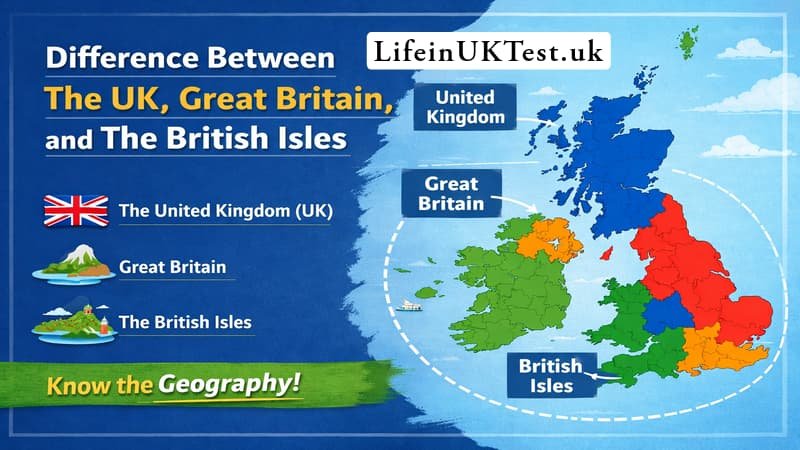
Let me paint you a picture to make this crystal clear: Imagine you’re looking at a map. The island of Great Britain has England, Scotland, and Wales. Now look to the left at the island of Ireland. The northern portion of that island is Northern Ireland, which is part of the UK. The southern and larger portion is the Republic of Ireland, which is a completely separate, independent country.
This is why “UK” and “Great Britain” aren’t interchangeable, even though people (including news outlets who should know better) use them that way all the time.
A Quick History Lesson (I Promise It’s Relevant)
The United Kingdom came together in stages:
- 1536-1542: England and Wales united
- 1707: England and Scotland joined to create the Kingdom of Great Britain
- 1801: Ireland joined, creating the United Kingdom of Great Britain and Ireland
- 1922: Most of Ireland became independent (now the Republic of Ireland), but Northern Ireland remained, giving us today’s “United Kingdom of Great Britain and Northern Ireland”
Understanding this timeline helps explain why the naming is so complicated. These aren’t just labels someone made up to confuse geography students—they reflect centuries of political unions, treaties, and agreements.
The Republic of Ireland: A Completely Different Country
Let’s be super clear about this because it’s a common mistake: the Republic of Ireland (or just “Ireland”) is NOT part of the UK. It’s not part of Great Britain. It’s a fully independent nation with its own government, its own currency (the euro), and its own seat at international tables.
The Republic of Ireland is:
- An independent country since 1922 (officially became a republic in 1949)
- Part of the European Union
- Uses the euro as currency
- Has its own government based in Dublin
Meanwhile, Northern Ireland:
- Is part of the United Kingdom
- Left the EU along with the rest of the UK through Brexit
- Uses the British pound sterling
- Sends representatives to the UK Parliament in London
Honestly, mixing these up is more than just a geographical error—it can be genuinely offensive to people on both sides of the border, given the complex and sometimes painful history between these nations.
Quick Reference: What’s What
Let me give you a handy breakdown to keep everything straight:
| Term | Type | What It Includes |
|---|---|---|
| British Isles | Geographical | All the islands: Great Britain, Ireland, Isle of Man, Channel Islands, and 6,000+ smaller islands |
| Great Britain | Geographical | The largest island containing England, Scotland, and Wales |
| United Kingdom (UK) | Political | England, Scotland, Wales, and Northern Ireland |
| England | Country | Just England (often wrongly used for the whole UK) |
| Ireland (the island) | Geographical | The whole island containing Northern Ireland and the Republic of Ireland |
| Republic of Ireland | Political | Independent country covering most of the island of Ireland |
| Crown Dependencies | Political | Isle of Man, Jersey, Guernsey (self-governing but not part of the UK) |
Common Mistakes (And How to Avoid Them)
Mistake #1: Using “England” to Mean the UK
This is probably the most common error, and it drives Scottish, Welsh, and Northern Irish people absolutely up the wall. England is just one country within the UK. Saying “England” when you mean the whole UK is like saying “Texas” when you mean the entire United States—technically wrong and potentially annoying.
How to fix it: If you’re talking about the political entity, use “UK” or “Britain.” If you specifically mean England, then say England.
Mistake #2: Thinking Ireland Is Part of the UK
The Republic of Ireland gained independence over a century ago. It’s a separate country with its own everything. Only Northern Ireland is part of the UK.
How to fix it: Remember the island of Ireland is split into two political entities—Northern Ireland (UK) and the Republic of Ireland (independent).
Mistake #3: Forgetting Northern Ireland Exists
When people say “Great Britain,” they often mean the UK, forgetting that Northern Ireland is part of the political union but not part of the island of Great Britain.
How to fix it: If you mean the political unit, say “UK” or “United Kingdom.” If you literally mean the island, “Great Britain” is correct.
Mistake #4: Calling Everyone “British”
While it’s technically correct to call UK citizens British, many Scottish, Welsh, and Northern Irish people identify primarily with their own national identity. Someone from Edinburgh might prefer “Scottish” to “British,” even though both are accurate.
How to fix it: When possible, use the specific nationality. If you’re unsure, “British” is generally safe, but be aware some people have strong feelings about this.
What About Those Other Islands?
Great question! The Isle of Man and the Channel Islands (Jersey, Guernsey, Alderney, Sark) are what’s called Crown Dependencies. They’re self-governing territories with their own governments and laws, but they’re not technically part of the UK. They have a relationship with the British Crown, but they’re not represented in the UK Parliament.
Think of them as semi-independent islands that have a special relationship with the UK but maintain their own identity and governance. They’re like that friend who’s close to your family but isn’t actually related.
The Brexit Angle (Because We Can’t Ignore It)
Brexit made these distinctions even more important. The UK (England, Scotland, Wales, and Northern Ireland) left the European Union, but the Republic of Ireland remains an EU member. This created a unique situation with the border between Northern Ireland and the Republic of Ireland—the only land border between the UK and the EU.
This has led to ongoing discussions about trade, movement, and identity in the region. Understanding the difference between Northern Ireland (part of the UK, left the EU) and the Republic of Ireland (independent country, still in the EU) became crucial for grasping Brexit’s complications.
Cultural Identities Matter
Here’s something that doesn’t always show up on maps but is incredibly important: how people identify themselves. The political boundaries are one thing, but personal identity is another.
Someone from Wales might consider themselves Welsh first, British second (or not at all). Someone from Scotland might feel strongly Scottish and ambivalent about Britishness. In Northern Ireland, identities can be particularly complex, with some people identifying as British, others as Irish, and still others as Northern Irish or a combination.
These aren’t just semantics—they reflect deep cultural connections, historical experiences, and personal values. The best approach? Listen to how people describe themselves and respect that.
How to Remember This Forever
Let’s be real—you might forget the details of this article by next week. So here’s a simple mental model to help you remember:
Think of nested circles:
- The biggest circle: British Isles (geography—all the islands)
- Medium circle: Great Britain (geography—the big island with three countries)
- Another medium circle overlapping: UK (politics—those three countries PLUS Northern Ireland)
- Outside circle, touching but separate: Republic of Ireland (independent country)
Or try this phrase: “The UK is Great Britain plus Northern Ireland, all sitting in the British Isles along with independent Ireland and some smaller islands.”
Why People Get This Wrong
Honestly, even people who live here sometimes muddle these terms, and there are good reasons for that:
- Casual usage: In everyday conversation, people often say “Britain” when they technically mean “UK”
- Historical complexity: These territories came together and apart over centuries
- Media confusion: News outlets frequently use these terms interchangeably
- Sport teams: “Team GB” at the Olympics actually includes Northern Ireland
- The names are similar: British Isles, Britain, Great Britain, British—they all sound related because they are!
Final Thoughts
Look, if you’ve made it this far, you now know more about UK geography and politics than probably 90% of people. The key takeaways?
- British Isles = geographical term for all the islands (though some avoid it)
- Great Britain = the big island with England, Scotland, and Wales
- United Kingdom = the political unit of England, Scotland, Wales, and Northern Ireland
- Republic of Ireland = completely independent country, not part of the UK
Will you occasionally slip up and say “England” when you mean “Britain”? Probably—we all do. But now you’ll catch yourself, and you’ll understand why your Scottish friends gently correct you.
These distinctions aren’t just academic trivia. They represent real places with real people who care deeply about their identities and their home’s place in the world. Getting it right shows that you’ve taken the time to understand the complexity and respect the differences.
And next time someone confidently declares that Ireland is part of the UK or uses England and Britain interchangeably, you can be the person who kindly explains the difference. Trust me, you’ll sound impressively knowledgeable, and you might just save someone from an awkward mistake.
Now go forth and never confuse these terms again! Or at least, when you do, you’ll know exactly what went wrong and how to fix it.