How to Pass Life in the UK Test First Time – Top 10 Tips from Real Success Stories – Passing the Life in the UK Test first time is something many people hope for, but not everyone knows the smartest way to prepare. If you’ve ever spoken to someone who’s already passed, you’ll know that success usually comes down to how they studied, not how long.
How to Pass Life in the UK Test First Time
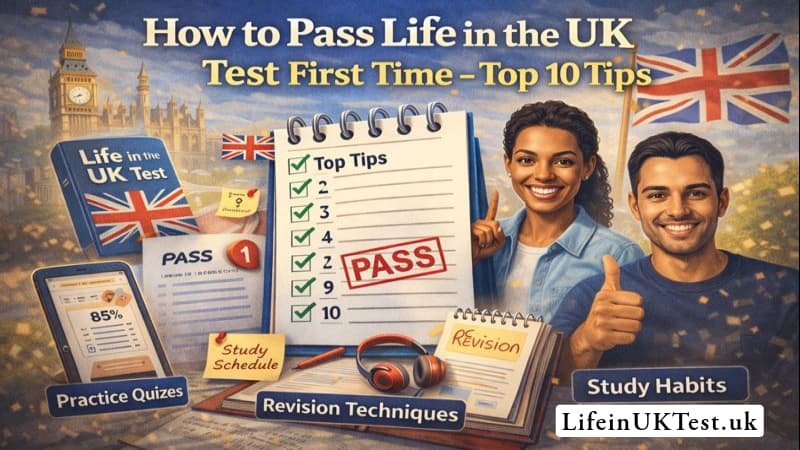
This article shares 10 practical tips from real Life in the UK Test success stories, focusing on what actually helped candidates pass on their first attempt. From revision habits to exam-day mindset, these proven tips are designed to help you feel confident, organised, and fully prepared—whether you’re applying for British citizenship or Indefinite Leave to Remain (ILR).
Why This Test Feels Harder Than It Should
So you’ve got your Life in the UK test coming up, and honestly? I get it. The stress is real. You’re probably wondering if you’ll remember which king did what in 1066, or whether you need to memorize every single Prime Minister since 1721.
Let’s be real here – thousands of people pass this test every year, and you can absolutely be one of them. I’ve gathered tips from folks who actually sat the test and passed first time. No fancy tricks, just what actually works.
Top 10 Tips from Real Success Stories
Here’s the thing nobody tells you: the Life in the UK test isn’t just about being clever. It’s about knowing the specific stuff they want you to know. You could live in Britain for 20 years and still fail if you don’t prepare properly. Why? Because everyday life doesn’t teach you when the Battle of Bosworth happened or how many members sit in the Welsh Assembly.
The pass mark is 75% (18 out of 24 questions), and you’ve got 45 minutes. Sounds easy, right? But the questions come from a handbook with 170+ pages of facts, dates, and names.
Tip 1: Get the Official Handbook First (Seriously, Don’t Skip This)
I know, I know. You’re thinking “can’t I just use free websites?” Sure, you can. But here’s what happened to Maria from Romania – she studied only from random websites and failed twice. Third time, she bought the actual handbook and passed.
The official book is called “Life in the United Kingdom: A Guide for New Residents” and costs around £12.99. Every single question in your test comes from this book. Not from Wikipedia. Not from that website your friend recommended. This exact book.
Where to get it:
- Amazon UK
- Major bookshops (Waterstones, WHSmith)
- Gov.uk official website
Yes, it’s a bit dry. Yes, some parts are boring. But it’s literally your exam syllabus.
You may also use free LifeinUKTest.uk online Life in the UK test book.
Tip 2: Make a Realistic Study Schedule (And Actually Stick to It)
You need about 2-3 weeks of proper study if you’re starting fresh. Not the night before. Not three days before.
Here’s a schedule that actually works:
Week 1: Read the handbook cover to cover. Don’t try to memorize yet, just read and understand. Take notes on stuff that seems tricky.
Week 2: Read it again, but slower. This time, make flashcards or notes for important dates, names, and numbers. Start taking practice tests.
Week 3: Practice tests every single day. Review your mistakes. The bits you keep getting wrong? Those need extra attention.
One thing I noticed again and again when speaking to people who passed the Life in the UK Test first time is that they didn’t try to copy anyone else’s routine. Some found an hour in the evening after a long day at work, while others preferred short, quiet study slots – 30 minutes in the morning and another 30 before bed. What really made the difference was consistency. They chose a routine that worked for their life and treated that study time as something important, not optional. Once they protected that time, everything else started to fall into place.
Tip 3: Practice Tests Are Your Best Friend
Let me tell you something important: reading the handbook once isn’t enough. You need to answer actual questions.
Why? Because the test asks questions in specific ways. You might know that the NHS was created in 1948, but the question might ask “When did the National Health Service begin?” or “What major healthcare change happened after World War II?”
Good practice test websites – You may refer LifeinUKTest.uk parctice tests and real exam like questions set.
Aim for scoring 90%+ consistently on practice tests before booking your real test. If you’re getting 18-19 out of 24, you’re cutting it too close.
Tip 4: Focus on the Chapters That Come Up Most
Not all chapters are equal. Some get tested way more than others.
The heavy hitters:
- Chapter 2 (A Long and Illustrious History) – expect 8-10 questions from here
- Chapter 5 (The UK Government, Law and Your Role) – another 5-7 questions
- Chapter 4 (A Modern, Thriving Society) – about 4-6 questions
The other chapters? They’ll show up, but less often.
Katerina from Ukraine spent 60% of her study time on those three chapters and said it made all the difference.
Tip 5: Dates and Numbers Need Special Attention
This is where most people trip up. The handbook is stuffed with dates, and they love testing you on them.
Must-know dates that come up constantly:
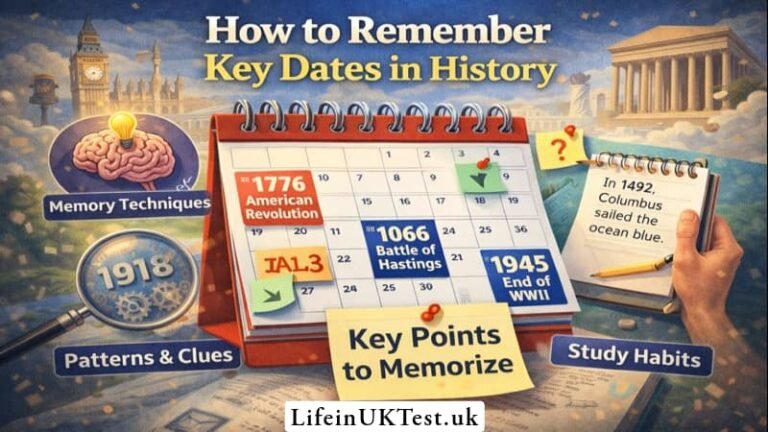
- 1066 – Battle of Hastings
- 1215 – Magna Carta
- 1348 – Black Death arrives
- 1588 – Spanish Armada defeated
- 1649 – Charles I executed
- 1660 – Restoration of monarchy (Charles II)
- 1689 – Bill of Rights
- 1707 – Act of Union (England and Scotland)
- 1776 – American Declaration of Independence
- 1789 – French Revolution begins
- 1801 – Ireland joins Union
- 1833 – Slavery abolished in British Empire
- 1918 – Women over 30 get vote
- 1928 – Women get equal voting rights with men
- 1945 – End of World War II
- 1948 – NHS created
- 1973 – UK joins European Economic Community
- 2016 – Brexit referendum
Make flashcards. Write them out. Test yourself before bed. Whatever works for you, but memorize these cold.
Tip 6: Don’t Just Memorize – Understand the Story
Here’s a mistake I see all the time: people try to memorize isolated facts without understanding how they connect.
Take the English Civil War. Instead of just memorizing “Charles I executed in 1649,” understand the story: King wants absolute power → Parliament says no → Civil war happens → Parliamentarians win → King gets executed → Cromwell rules → Nobody likes it → Monarchy comes back in 1660.
When you understand the story, the dates stick better. Plus, some questions test whether you actually understand what happened, not just when.
Tip 7: Watch Out for Trick Questions
The test has questions designed to catch you out. They’re not trying to be mean – they’re checking if you really know your stuff or just guessed.
Common tricks:
- “Which of these is NOT true?” – You need to spot the false statement
- Very similar options – Like “1918” vs “1928” for women’s voting rights
- Questions about what you can’t do – “Which of these cannot become an MP?”
Carlos from Spain said he failed first time because he read questions too quickly. Second time, he read every word carefully and passed easily. Slow down. The 45 minutes is plenty of time.
Tip 8: Book Your Test Strategically
You can book your test at various centers across the UK. It costs £50, and you’ll need to bring photo ID and your booking confirmation.
Smart booking tips:
- Book for mid-morning (10am-ish) when your brain is fresh
- Avoid Mondays if you’re the nervous type – give yourself the weekend to relax
- Check the test center location beforehand – you don’t want to be stressed about finding it
- Book at least 3-4 weeks out so you have proper study time
If you fail, you have to pay another £50 and wait 7 days before retesting. That’s £50 and your pride – better to prepare properly the first time.
Tip 9: The Night Before and Test Day Strategy
Okay, it’s the night before your test. What should you do?
What to do:
- Quick review of your weak areas (don’t try to learn new stuff now)
- Look over those tricky dates one more time
- Get your ID and documents ready
- Get a good night’s sleep (seriously, tired brains forget stuff)
What NOT to do:
- Stay up late cramming
- Try to read the entire handbook again
- Panic and convince yourself you’ll fail
- Drink five coffees before the test
On test day:
- Arrive 15 minutes early
- Bring your ID and booking reference
- Use the toilet before going in (no breaks during test!)
- Take a few deep breaths before starting
The test is on a computer. You click your answers and can flag questions to review later. Use that feature if you’re unsure – come back to tricky ones at the end.
Tip 10: Learn from Others’ Mistakes
Real stories from real people who’ve sat this test:
Mistake 1 – Not reading the handbook: “I thought YouTube videos would be enough. Failed with 14/24. Bought the book, passed next time with 22/24.” – James from Nigeria
Mistake 2 – Booking too early: “I studied for a week, thought I was ready. Got 16/24. Studied properly for three weeks, retook it, got 23/24.” – Lin from China
Mistake 3 – Ignoring practice tests: “I read the book three times but never did practice tests. The actual test questions confused me because they were worded differently than I expected.” – Anna from Poland
Mistake 4 – Panicking during the test: “I got two questions wrong at the start and panicked. Rushed through the rest and failed. Second time, I stayed calm and passed.” – Mohammed from Pakistan
What Nobody Tells You About This Test
Let’s talk about the stuff the official guidance doesn’t mention:
The test questions are random. Your friend who sat it yesterday got different questions than you’ll get. That’s why you need to know the whole handbook, not just bits.
Some questions feel really unfair. You might get asked about obscure poets or specific sports records. Everyone feels this way. Just make your best guess and move on.
You can’t take anything into the test. No phones, bags, notes, nothing. They’re strict about this.
The results are instant. As soon as you finish, the computer tells you if you passed. No waiting around.
Your pass certificate arrives by post within 10 days. You need this for your next visa application step.
Key Takeaway
Passing the Life in the UK test first time comes down to three things: getting the official handbook, putting in 2-3 weeks of solid study, and doing loads of practice tests until you’re consistently scoring 90%+.
It’s not about being brilliant – it’s about being prepared. Thousands of people from every country, every background, every education level pass this test. The ones who pass first time are simply the ones who took it seriously and studied properly.
You’ve got this. The test is totally doable if you put the work in. Buy that handbook today, make your study schedule, and commit to it. In a few weeks, you’ll have your pass certificate and be one step closer to your UK goals.
Good luck – though honestly, if you follow these tips, you won’t need luck. You’ll be ready.
Remember: The Life in the UK test changes occasionally when they update the handbook. Make sure you’re studying from the latest edition (check the publication date). As of 2026, the current edition is the 3rd edition, published in 2013 with regular updates.