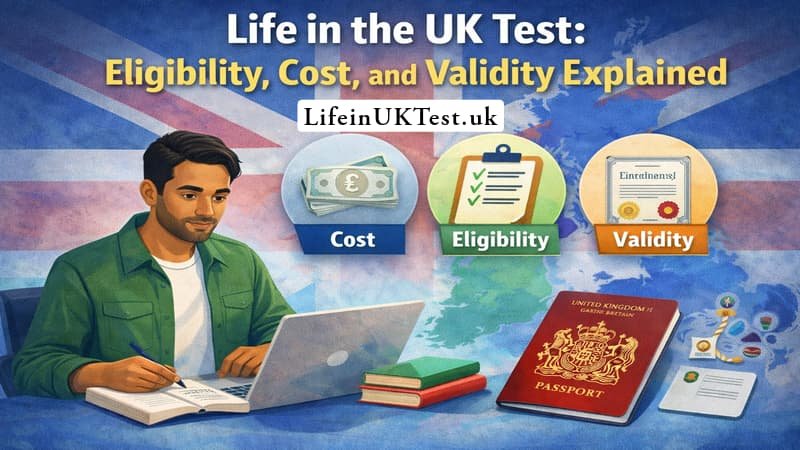
Life in the UK Test: Eligibility, Cost, and Validity Explained is a complete guide for anyone planning to apply for British citizenship or Indefinite Leave to Remain (ILR). The Life in the UK Test is a mandatory requirement for many applicants, and understanding who is eligible to take the test, how much it costs, and how long the test result remains valid is essential. This article explains these key details clearly to help you prepare and apply with confidence.
Life in the UK Test 2026: Eligibility, Cost, and Validity Explained
Look, if you’re reading this, chances are you’re either gearing up for one of the most important milestones in your UK immigration journey, or you’re trying to figure out if you even need to take this test at all. Either way, I’ve got you covered. Let me walk you through everything you need to know about the Life in the UK test in 2026—the eligibility requirements, what it’ll cost you, how long your certificate stays valid, and honestly, the stuff nobody tells you until it’s too late.
What Exactly Is This Test, Anyway?
The Life in the UK test isn’t just another bureaucratic hurdle (though let’s be real, it can feel that way). It’s a computer-based exam that tests your knowledge of British history, culture, traditions, and values. Think of it as the UK government’s way of making sure you understand what life here is actually about—from medieval monarchs to modern democracy, from the NHS to how the legal system works.
Here’s the thing: this test has been around since 2005, and while it’s been criticized over the years (some people call it a “bad pub quiz”), it’s not going anywhere. In fact, the government announced in October 2025 that they’re planning to modernize it, though as of early 2026, no new handbook or syllabus has been officially released. So for now, you’ll be working with the current version.
The test consists of 24 multiple-choice questions, and you’ve got 45 minutes to answer them. You need to get at least 18 questions right—that’s a 75% pass mark. The questions cover everything from British values and history to everyday life and the political system.
Who Actually Needs to Take This Test?
Let’s start with the basics. You’ll need to pass the Life in the UK test if you’re applying for either:
- Indefinite Leave to Remain (ILR) – permanent settlement in the UK
- British citizenship (naturalization) – becoming a British citizen
This applies to most people aged 18 to 65 who are on visa routes like the Skilled Worker visa, Spouse visa, Long Residence route, or any other pathway that leads to permanent settlement.
Now, here’s something important: the test is separate from the English language requirement. A lot of people get confused about this. You need to prove your English skills separately (usually with a B1 level qualification or an English-taught degree) AND pass the Life in the UK test. They’re two different requirements, both mandatory.
Who Gets a Free Pass? (The Exemptions)
Not everyone has to take the test, and honestly, if you qualify for an exemption, you should absolutely explore that route. Here’s who gets off the hook:
Age-Based Exemptions
- Under 18 years old – You’re exempt. Period.
- 65 years or older – Also exempt. The government recognizes that learning and testing at this age can be unreasonable.
Medical Exemptions
This is where things get more nuanced. You may be exempt if you have a long-term physical or mental condition that prevents you from studying for or taking the test. But—and this is crucial—the condition needs to be permanent or long-term. Temporary conditions like short-term stress, situational depression, or brief illnesses typically won’t cut it.
To claim a medical exemption, you’ll need:
- A completed exemption form (available on GOV.UK)
- A detailed letter from a qualified medical professional—your GP or a GMC-registered consultant who has personally assessed you
- Current medical reports explaining your diagnosis, how it affects your ability to study or take the test, and why it’s long-term
The Home Office evaluates these on a case-by-case basis. They’re looking for substantial evidence that clearly demonstrates how your condition genuinely prevents you from participating. General or vague statements won’t be accepted. If you’re considering this route, honestly, get professional immigration advice—a solicitor can help ensure your exemption claim is properly documented and has the best chance of success.
Important note: Visual or hearing impairments alone don’t automatically exempt you—test centres can provide special arrangements for disabilities. But if your condition makes it impossible to prepare for or take the exam, that’s when exemption applies.
Already Passed Before?
Good news: if you’ve already passed the Life in the UK test for a previous application (like when you got ILR), you don’t need to take it again when applying for citizenship. Your pass certificate doesn’t expire—more on that in a moment.
However, there’s one major exception that catches people out: if you’re in the UK on the EU Settlement Scheme (settled or pre-settled status), you’ll still need to take the Life in the UK test if you apply for British citizenship. EU settlement doesn’t count as having already passed the test for naturalization purposes.
The Real Cost in 2026 (It’s More Than Just £50)
Alright, let’s talk money. The official test fee is £50—this has been the standard rate for several years now. However (and this is one of those things they don’t shout about), pricing can vary depending on when you book:
- Weekday appointments – Standard £50 fee
- Sunday or peak-time bookings – Can cost up to £65
- Short-notice appointments – Also potentially higher
My advice? Book early. Not only do you save money, but you also get better availability at test centres. You need to book at least three days in advance anyway, so plan ahead.
Payment Methods
You’ll need a debit or credit card to pay when booking online. If you don’t have one, a prepaid credit card works too.
Hidden Costs People Forget About
Here’s what catches people off guard:
If you fail: You pay £50 every single time you retake the test. There’s no limit to how many attempts you can make, but each one costs money. Some people end up spending £150, £200, or more before they pass. This is why proper preparation is absolutely worth the investment.
Study materials: The official handbook “Life in the United Kingdom: A Guide for New Residents” (3rd edition) costs around £13. You might also want to budget for practice test apps or online resources—many are free, but premium ones can cost £10-30.
Travel to the test centre: Depending on where you live, you might need to travel to your nearest test centre. Factor in transport costs and possibly time off work.
How to Book Your Test (Step by Step)
Booking is straightforward, but there are specific requirements and common mistakes to avoid. Here’s how it works:
Before You Book, You’ll Need:
- A valid email address – This is how they’ll communicate with you
- Payment method – Debit, credit, or prepaid card
- Valid photo ID – More on this below
- Your details ready – Name (exactly as it appears on your ID), place of birth (country, not city—this catches people out), and date of birth
The Booking Process
- Go to the official booking website: www.lituktestbooking.co.uk (or find it through GOV.UK)
- Register for an account if it’s your first time
- Select your nearest test centre (there are around 30 across the UK)
- Choose an available date and time slot
- Enter your details EXACTLY as they appear on your ID
- Pay the fee
Critical warning: The name you provide when booking MUST match your ID exactly. If there’s even a slight mismatch, you could be turned away on test day and lose your £50. Double-check, triple-check.
About That Photo ID
This is genuinely one of the biggest reasons people get turned away. You need to bring the ORIGINAL photo ID you used when booking. Accepted ID includes:
- Valid passport (any nationality)
- Biometric Residence Permit (BRP)
- Biometric Residence Card (BRC)
- EU national identity card
- UK Home Office travel documents (Convention Travel Document, Stateless Person’s Document, Certificate of Identity)
2026 Update: Since BRPs are being phased out and replaced with eVisas (digital status), you can now use your digital immigration status record instead of a physical BRP for booking. This is a significant shift that streamlines the process, especially if your BRP has expired. However, you’ll still need to bring appropriate ID to the test centre—an expired BRP is now acceptable for identification at test centres as of January 2025.
What won’t work:
- Photocopies
- Driving licenses
- National Insurance cards
- Bank cards
- Birth certificates
Cancellations and Refunds
Life happens. If you need to cancel, you must do it at least 72 hours (3 days) before your test date to get a refund. The refund goes back to the card you used for payment. Cancel any later than that, and you lose your money.
Test Day: What to Actually Expect
Let me paint you a picture of what test day actually looks like, because knowing this ahead of time will massively reduce your anxiety.
Timing and Arrival
Give yourself a 2-hour window. Seriously. Here’s why:
- Arrive 15 minutes early for check-in
- Identity verification takes about 15 minutes
- The actual test is 45 minutes
- Results come within 5 minutes of finishing
- Optional practice questions at the start
The Test Format
You’ll sit at a computer terminal in a supervised room. The test is entirely computer-based—you click your answers using a mouse. Don’t panic if you’re not tech-savvy; if you can use a mouse and keyboard at a basic level, you’re fine. Some test centres even offer practice computers or sessions beforehand.
The exam presents 24 questions, one at a time. You can’t go back to previous questions once you’ve moved on (this is important—make sure of your answer before clicking “next”). However, some test centres do allow you to review and change answers—this varies, so don’t count on it.
Helpful tip: You’ll actually see 28 questions total on screen, but the first 4 are practice questions to help you get comfortable. These don’t count toward your score—only the following 24 questions matter.
Time management: You have 45 minutes for 24 questions. That’s nearly 2 minutes per question. Most people find this is plenty of time—rushing leads to careless mistakes. Read each question carefully.
At the Test Centre
- No phones, bags, or personal items allowed in the test room
- You can’t bring notes or study materials
- Some centres provide lockers for your belongings
- Headphones are available if you prefer to have questions read aloud
- Bathroom breaks might be allowed but check with your centre
Getting Your Results
This is the nerve-wracking part. After you finish, the computer marks your test immediately. Within 5 minutes, you’ll receive either a pass or fail notification.
If you pass: You get a pass certificate with a Unique Reference Number (URN). KEEP THIS SAFE. You’ll need this number for your ILR or citizenship application, and it never expires.
If you fail: You’ll see your percentage score but won’t get detailed feedback on which questions you got wrong. This changed in 2025—previously, you could see more detailed breakdowns. Now, you just know your overall score. Some test centres might informally point you toward relevant sections of the handbook if you ask, but this isn’t guaranteed.
Certificate Validity: Here’s What You Need to Know
This is where there’s been some confusion and conflicting information, so let me clear this up based on the most current guidance in 2026:
The Official Position
Your Life in the UK test pass certificate does NOT expire. Once you’ve passed, that result remains valid indefinitely. This is confirmed in the latest Home Office guidance as of November 2025.
You can use the same certificate for both your ILR application and later for citizenship, even if years have passed between them. The Home Office accepts previous passes regardless of how long ago you took the test, provided the certificate is genuine and the details match your identity.
The Two-Year Confusion
Some sources suggest a two-year validity period. Here’s the truth: while your certificate itself doesn’t expire, it’s wise to plan your citizenship or ILR application within a reasonable timeframe after passing. Why? Because if too much time passes, other circumstances might change (like immigration rules or your personal situation), and you’d want your immigration journey to progress while your knowledge is fresh.
However, legally speaking, there’s no expiry date. If you passed the test in 2020 and apply for citizenship in 2026, that certificate is still valid.
Lost Your Certificate?
If you took the test before December 17, 2019, you received a letter with a “test reference ID” instead of the current unique reference number. Only one copy was issued, and replacements aren’t provided. If you’ve lost this letter, you’ll need to explain the situation in your application—the Home Office will verify your pass through their records.
For tests taken after December 17, 2019, you can contact your test centre to request a replacement certificate, though there may be a fee involved.
How to Actually Prepare (And Pass First Time)
Let’s talk strategy. The pass rate hovers around 70-75%, which means about a quarter of people fail. You don’t want to be in that group, especially when each retake costs £50.
The Official Resource You Cannot Skip
“Life in the United Kingdom: A Guide for New Residents” (3rd edition) is the ONLY official handbook. Every question on the test comes from this book. You can buy it:
- On the official website: www.officiallifeintheuk.co.uk
- Amazon
- Major bookstores
Cost is around £13. This is non-negotiable—get this book. Don’t rely solely on third-party materials or old editions. The test was last updated in 2013 based on the 3rd edition, and while a 2026 revision has been discussed, nothing official has been published yet.
Study Timeline
Most successful candidates spend 4-6 weeks studying, dedicating about 1-2 hours daily. This isn’t something you can cram for the night before (though some people try—don’t be that person).
Here’s a realistic study plan:
Week 1-2: Read through the entire handbook once. Don’t try to memorize yet—just get familiar with the content.
Week 3-4: Read again, this time taking notes on key facts, dates, names, and concepts. Focus extra attention on British history—it makes up about 40% of questions.
Week 5-6: Practice tests, practice tests, practice tests. Use online resources, apps, and take multiple mock exams to identify weak areas.
What to Focus On
The handbook covers five main chapters:
- The values and principles of the UK – British values, democracy, law
- What is the UK? – History from ancient times to present day
- A long and illustrious history – More detailed history
- A modern, thriving society – Contemporary UK life, religion, customs, sports, arts
- The UK government, the law and your role – Political system, judiciary, how to participate
British history is the heavyweight. Expect lots of questions on:
- Key monarchs and their significance
- Major historical events (Roman Britain, Norman Conquest, Tudor period, etc.)
- Important figures (scientists, writers, politicians)
- Wars and conflicts (World Wars, civil wars)
- Social and political reforms
You DON’T need to memorize birth and death dates of historical figures—that’s not tested. Focus on what they did and why it mattered.
Study Methods That Work
Flashcards: Create physical or digital flashcards for key facts. Apps like Anki or Quizlet are perfect for this.
Practice tests: Take as many as you can find. The official GOV.UK site has sample questions. Countless apps and websites offer full mock tests—some free, many paid. These help you understand the question style and improve time management.
Study groups: Join online forums or Facebook groups where test-takers share experiences, difficult questions, and support. Talking through the material helps it stick.
Visual learners: Watch YouTube videos on British history and culture. Sometimes seeing it explained visually makes it easier to remember than just reading.
Common Mistakes to Avoid
Using outdated materials: The handbook gets updated periodically. Make sure you’re studying from the current 3rd edition. Using old information is like studying the wrong textbook—you’ll learn incorrect facts.
Ignoring “boring” sections: Some people skip sections they find dull (like government structure or legal processes). Don’t. Questions come from ALL parts of the handbook.
Underestimating it: “It’s just a citizenship test, how hard can it be?” Harder than you think if you don’t prepare properly. Even native Brits often struggle with these questions because they’re quite specific.
Cramming: Last-minute cramming rarely works. Your brain needs time to process and retain this much information.
Panicking on test day: Practice tests help build confidence. If you’ve answered hundreds of practice questions and consistently score above 75%, you’ll walk into that test centre feeling ready.
What Happens If You Fail?
Let’s be honest—it happens. If you don’t pass, here’s what you need to know:
Retaking the Test
- No waiting period: You can rebook immediately if you want (though I’d suggest taking time to study more first)
- Unlimited attempts: No cap on how many times you can try
- Same £50 fee: Every attempt costs the full price
- No detailed feedback: You’ll only see your percentage score, not which specific questions you got wrong
Strategic Retaking
If you fail, don’t just book another test right away. Take at least a week to:
- Review the sections you felt weakest on
- Take more practice tests
- Identify patterns in the types of questions you’re missing
- Focus your study on those specific areas
Some test centres might informally suggest which sections to review, but this isn’t standard. Most of the time, you’re on your own to figure out where you went wrong.
When to Seek Help
If you’ve failed twice with the same study approach, something isn’t working. Consider:
- Professional tutoring: Some immigration advisors offer Life in the UK test preparation
- Reassessing your study method: Maybe you need a different approach
- Medical exemption assessment: If you’re genuinely struggling due to an undiagnosed condition, talk to a doctor and immigration solicitor about whether exemption is appropriate
Recent Changes and What’s Coming in 2026
The immigration landscape is always shifting, so here’s what you should know about recent and upcoming changes:
October 2025 Announcement
The government announced plans to “modernize” and “refresh” the Life in the UK test to better reflect contemporary civic life. This review was conducted by the Department for Levelling Up, Housing and Communities and the Home Office Citizenship Directorate.
As of early January 2026: No new syllabus or revised handbook has been published. The existing 3rd edition handbook and question bank remain the current standard.
What this means for you: Study using the current materials until official new resources are released on GOV.UK. Don’t wait for the update—it could be months or years before changes are implemented.
eVisa Integration
A practical change that’s already in effect: with BRPs being phased out, the booking system now accepts eVisas (digital immigration status) for test bookings. This streamlines the process significantly, especially for those whose BRPs have expired or are nearing expiration.
Format and Requirements
Not changing: The 24-question, 45-minute, 75% pass mark format will remain the same even if content is updated. The fundamental requirement to pass the test for ILR and citizenship applications is unchanged.
Real Talk: Do You Really Need a Solicitor?
Most people don’t need professional legal help just for the test itself—it’s straightforward once you understand the requirements and prepare properly. However, professional advice becomes valuable in these situations:
When to Get Legal Help
Medical exemptions: If you’re claiming a medical exemption, an immigration solicitor can:
- Ensure your medical documentation is comprehensive and properly formatted
- Advise whether your condition actually qualifies under Home Office criteria
- Explore alternative pathways if the test genuinely isn’t suitable for you
- Strengthen your exemption application to avoid refusal
Complex immigration history: Previous visa refusals, gaps in immigration status, or complicated family circumstances can affect how the Life in the UK test requirement applies to you.
Unclear eligibility: If you’re unsure whether you need to take the test for your specific visa route or circumstances, getting clarification could save you time and money.
Failed multiple times: If you’ve attempted the test several times without success despite studying, a solicitor might identify whether there’s a broader issue with your application approach or if exemption is actually appropriate.
DIY or Professional Help?
Go DIY if:
- Your immigration history is straightforward
- You have the time and ability to study independently
- You’re confident in your English skills and learning ability
- No medical or accessibility concerns
Get professional help if:
- You’re claiming any kind of exemption
- Your immigration status is complex or has previous issues
- You’ve failed twice with proper preparation
- You’re approaching age 65 or have borderline eligibility
- You want to avoid any risk that could delay your settlement
The Resources You Actually Need
Let me give you a curated list of genuinely useful resources (not just random websites):
Official Resources
| Resource | Purpose | Link |
|---|---|---|
| Official Handbook | Primary study material | www.officiallifeintheuk.co.uk |
| GOV.UK Test Information | Booking and official info | www.gov.uk/life-in-the-uk-test |
| Official Booking Site | Where you actually book | www.lituktestbooking.co.uk |
| Medical Exemption Form | For medical exemption claims | Available on GOV.UK publications |
Other Resources
LifeinUKTest.uk provides comprehensive study materials and realistic practice tests to help you prepare confidently for the Life in the UK Test. LifeinUKTest.uk resources are designed to make learning easier, improve your understanding of key topics, and increase your chances of passing the test on your first attempt.
Practice Test Sites
Free options:
- GOV.UK sample questions
- LifeinUKTest.uk (practice questions and tests)
- Various YouTube channels with test walkthroughs
Paid options:
- Official practice test apps (Google Play/App Store)
- Commercial test preparation websites (typically £10-30 for full access)
My honest advice: Start with free resources like LifeinUKTest.uk. If you’re still struggling, then invest in paid materials.
Community Support
Facebook groups and online forums dedicated to UK immigration have active communities where people share:
- Recent test experiences
- Difficult questions they encountered
- Study tips and encouragement
- Test centre reviews
These can be surprisingly helpful for emotional support and practical advice from people who’ve recently been through it.
Your Step-by-Step Action Plan
Alright, let’s put this all together into a practical action plan you can actually follow:
Month 1-2 Before Your Target Application Date
- Check your exemption eligibility – Are you under 18, over 65, or have a qualifying medical condition?
- If exempt: Gather necessary medical documentation and consult with an immigration solicitor
- If not exempt: Purchase the official handbook and begin reading
Month 0.5-1 Before Test
- Book your test – At least 3-4 weeks out for best availability and pricing
- Confirm your ID – Verify your photo ID is current and matches your booking details exactly
- Create study schedule – Dedicate 1-2 hours daily for 4-6 weeks
Study Phase
- Week 1-2: First read-through of handbook
- Week 3-4: Detailed notes and focused review
- Week 5-6: Practice tests and weak area review
- Final days: Light review, rest well, stay confident
Test Day
- Arrive 15 minutes early
- Bring original photo ID (the exact one used for booking)
- Stay calm and read questions carefully
- Take your time (45 minutes is generally enough)
After the Test
- Pass: Save your certificate and URN safely
- Fail: Review, study weak areas, book retake
- Plan your ILR/citizenship application within a reasonable timeframe
Final Thoughts: You’ve Got This
Look, I know the Life in the UK test can feel like just another obstacle in what’s already been a long immigration journey. And honestly, some of the questions are oddly specific—even British people often can’t answer them. But here’s the thing: with proper preparation, most people pass. The 70-75% pass rate means the majority of test-takers succeed.
The key is treating this seriously without letting it overwhelm you. It’s not an IQ test or a measure of your worth—it’s a standardized exam with predictable content that can absolutely be learned.
Give yourself enough time to prepare properly. Don’t try to wing it or cram at the last minute. Use the official handbook as your primary resource. Take practice tests until you’re consistently scoring well above 75%. And remember, even if you don’t pass the first time, you can try again.
Your settlement in the UK—whether through ILR or citizenship—is worth the effort. This test is one milestone on that journey, and it’s completely achievable with the right approach.
If you have questions about your specific situation, especially regarding exemptions or complex immigration circumstances, don’t hesitate to reach out to a qualified immigration solicitor. Sometimes a bit of professional guidance early on can save you significant stress and expense down the road.
Good luck with your test, and welcome to the next chapter of your life in the UK. You’re going to do brilliantly.
Note: This article is based on information current as of January 2026. Immigration rules and test requirements can change, so always check the official GOV.UK website for the most up-to-date guidance. This article provides general information and should not be considered legal advice. For advice specific to your circumstances, consult a qualified immigration solicitor.