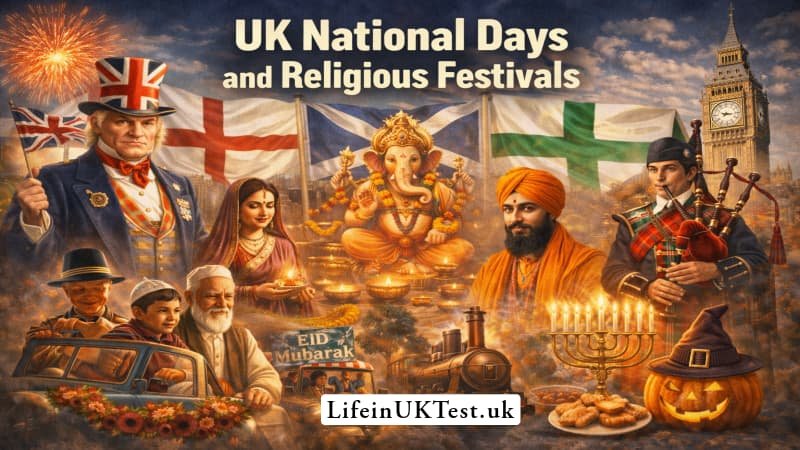
UK National Days and Religious Festivals – The United Kingdom celebrates a rich mix of national days and religious festivals that reflect its history, culture, and diverse faith communities. From officially recognized national observances to widely celebrated Christian, Islamic, Hindu, Sikh, and Jewish festivals, these events play an important role in British social and cultural life. This article on UK National Days and Religious Festivals explores their meanings, dates, and significance, helping readers understand how traditions and beliefs are observed across England, Scotland, Wales, and Northern Ireland.
UK National Days and Religious Festivals: Your Complete Guide for the Life in the UK Test
Look, I’ll be honest with you—when I first started preparing for the Life in the UK test, the sheer number of festivals and national days felt overwhelming. But here’s the thing: once you understand why these celebrations matter to British culture, they actually stick in your memory much better.
Let me walk you through everything you need to know, starting with what you’ll actually face in the test.
What You Really Need to Know
The Life in the UK test won’t ask you to memorize every single holiday. Instead, it focuses on the major celebrations that shape British identity and culture. Think of it this way—these festivals tell the story of Britain’s history, traditions, and the diverse communities that call it home.
Most questions will test whether you understand:
- When major festivals happen (specific dates or general timeframes)
- Why people celebrate them
- The basic traditions involved
- How different communities observe their religious festivals
The Big Four: UK National Days
Let’s start with the patron saints. Each nation within the UK has its own special day, and yes, the test does ask about these.
| National Day | Date | Nation | Patron Saint | Key Traditions | Since When |
|---|---|---|---|---|---|
| St David’s Day | 1st March | Wales | St David | Wearing daffodils or leeks, parades, traditional Welsh food | 12th century (became official much later) |
| St Patrick’s Day | 17th March | Northern Ireland | St Patrick | Parades (especially in Belfast and Derry), wearing green | 5th century (St Patrick’s death) |
| St George’s Day | 23rd April | England | St George | Flying the flag, some local parades, rose symbol | Medieval period |
| St Andrew’s Day | 30th November | Scotland | St Andrew | Scottish celebrations, traditional music, haggis | Medieval period, official bank holiday since 2007 |
Here’s something that trips people up: St Andrew’s Day is a bank holiday in Scotland, but the other patron saint days aren’t automatically bank holidays in their respective nations. Strange, right? But that’s exactly the kind of detail the test loves.
Major Christian Festivals
Christianity has shaped British culture for centuries, so these festivals appear throughout the test material.
| Festival | Date/Month | Why Celebrated | Started | Important Details |
|---|---|---|---|---|
| Christmas Day | 25th December | Birth of Jesus Christ | 4th century officially | Bank holiday, family gatherings, gift-giving, traditional dinner |
| Boxing Day | 26th December | Day after Christmas | Medieval times | Bank holiday, traditionally for giving to the poor |
| Easter | March or April (varies) | Resurrection of Jesus Christ | Early Christianity | Good Friday and Easter Monday are bank holidays, chocolate eggs tradition |
| Good Friday | Friday before Easter | Crucifixion of Jesus | Early Christianity | Bank holiday, hot cross buns tradition |
| Easter Monday | Monday after Easter | Part of Easter celebration | Varies by tradition | Bank holiday in England, Wales, and Northern Ireland (not Scotland) |
Real talk: students often forget that Easter moves around each year. It’s based on the lunar calendar, falling on the first Sunday after the first full moon following the spring equinox. The test might ask about Easter being in “spring” rather than a specific date.
Other Important UK Celebrations
These aren’t religious, but they’re deeply embedded in British culture and history.
| Event | Date | Significance | Since When | What Happens |
|---|---|---|---|---|
| New Year’s Day | 1st January | Start of the new year | Ancient times | Bank holiday, Hogmanay in Scotland (31st Dec) |
| Remembrance Day | 11th November | Honour those who died in wars | 1919 (after WWI) | Two-minute silence at 11am, poppy wearing |
| Bonfire Night (Guy Fawkes Night) | 5th November | Failed Gunpowder Plot of 1605 | 1605 | Fireworks, bonfires, burning effigies |
| Notting Hill Carnival | August Bank Holiday weekend | Caribbean culture celebration | 1966 | Europe’s biggest street festival, London |
Bonfire Night is interesting because it commemorates something that didn’t happen—Guy Fawkes failed to blow up Parliament. British humour at its finest, honestly.
Religious Festivals from Other Faiths
Britain is wonderfully diverse, and the test reflects that. You need to know about major festivals from different religious communities.
Islamic Festivals
| Festival | When | Why Celebrated | Key Information |
|---|---|---|---|
| Eid al-Fitr | End of Ramadan (varies yearly) | Breaking the fast | Month-long fasting ends, special prayers, gift-giving |
| Eid al-Adha | Approximately 70 days after Eid al-Fitr | Commemorate Abraham’s willingness to sacrifice his son | Festival of sacrifice, charitable giving |
The dates move each year because Islam follows a lunar calendar. Don’t try to memorize specific dates—just understand they’re in different seasons each year.
Hindu Festivals
| Festival | Usual Month | Why Celebrated | Traditions |
|---|---|---|---|
| Diwali | October or November | Festival of lights, victory of light over darkness | Oil lamps (diyas), fireworks, sweets, new clothes |
| Holi | March | Arrival of spring, triumph of good over evil | Coloured powder throwing, bonfires |
Diwali is probably the Hindu festival you’ll see mentioned most in test materials. It’s celebrated by millions in the UK.
Sikh Festivals
| Festival | When | Significance | Details |
|---|---|---|---|
| Vaisakhi | 14th April | Sikh New Year, founding of Khalsa | Parades (Nagar Kirtan), special services at Gurdwaras |
Jewish Festivals
| Festival | Usual Month | Why Celebrated | Key Features |
|---|---|---|---|
| Rosh Hashanah | September or October | Jewish New Year | Reflection, sounding of the shofar (ram’s horn) |
| Yom Kippur | 10 days after Rosh Hashanah | Day of Atonement | Fasting, prayer, repentance |
| Hanukkah | November or December | Rededication of Holy Temple | Eight-day festival, lighting the menorah |
| Passover (Pesach) | March or April | Exodus from Egypt | Seder meal, unleavened bread (matzah) |
Jewish festivals also follow a lunar calendar, so dates shift on the Gregorian calendar we commonly use.
Bank Holidays You Need to Know
Bank holidays are when most people get time off work. The test sometimes asks about these.
| Bank Holiday | When | England | Wales | Scotland | N. Ireland |
|---|---|---|---|---|---|
| New Year’s Day | 1st January | ✓ | ✓ | ✓ | ✓ |
| 2nd January | 2nd January | ✗ | ✗ | ✓ | ✗ |
| St Patrick’s Day | 17th March | ✗ | ✗ | ✗ | ✓ |
| Good Friday | March/April | ✓ | ✓ | ✓ | ✓ |
| Easter Monday | March/April | ✓ | ✓ | ✗ | ✓ |
| Early May | First Monday in May | ✓ | ✓ | ✓ | ✓ |
| Spring | Last Monday in May | ✓ | ✓ | ✓ | ✓ |
| Summer | Last Monday in August | ✓ | ✓ | ✓ | ✓ |
| St Andrew’s Day | 30th November | ✗ | ✗ | ✓ | ✗ |
| Christmas Day | 25th December | ✓ | ✓ | ✓ | ✓ |
| Boxing Day | 26th December | ✓ | ✓ | ✓ | ✓ |
Notice how Scotland gets the 2nd of January off but not Easter Monday? Meanwhile, Northern Ireland gets St Patrick’s Day. These differences matter for test questions about regional variations.
Common Test Mistakes to Avoid
After helping several people prepare, I’ve noticed the same errors coming up:
Mixing up patron saints and their nations. St David is Wales, St George is England, St Patrick is Northern Ireland, St Andrew is Scotland. Write it down repeatedly if you need to.
Assuming all patron saint days are bank holidays. They’re not. Only St Andrew’s Day in Scotland and St Patrick’s Day in Northern Ireland are official bank holidays.
Forgetting that religious festival dates change. Easter, Diwali, Eid, and Jewish festivals don’t happen on fixed dates in the Gregorian calendar.
Confusing Remembrance Day (11th November) with Remembrance Sunday (the second Sunday in November). The test usually asks about the 11th November specifically and the two-minute silence at 11am.
Key Vocabulary You’ll Encounter
- Bank holiday: Official day off work
- Patron saint: Guardian saint of a country or group
- Lunar calendar: Calendar based on moon cycles (causes dates to shift yearly)
- Commemorate: Remember and honour
- Observance: Keeping or celebrating a custom or festival
How to Actually Remember All This
Let’s be real—staring at tables won’t help. Here’s what actually works:
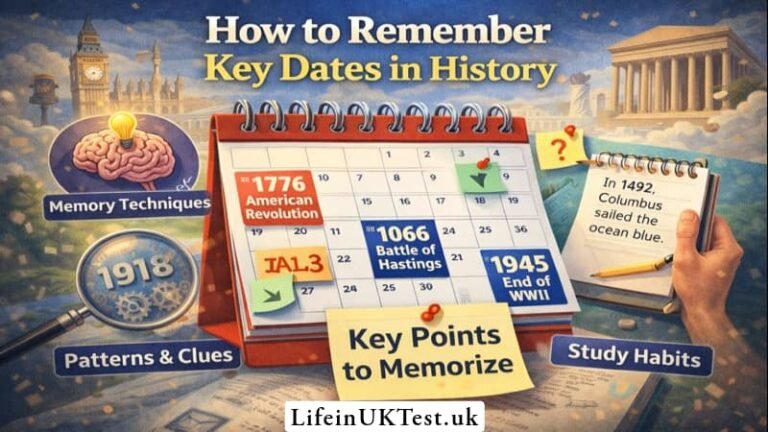
Create a calendar. Seriously, get a blank yearly calendar and mark these festivals. Seeing them spread across the year helps your brain organize the information spatially.
Make connections. St Andrew’s Day is 30th November—think “Andrew’s day ends November.” St Patrick’s Day is 17th March—lucky number 17, Irish luck. Silly? Maybe. Effective? Absolutely.
Focus on why, not just when. Understanding that Bonfire Night celebrates foiling a plot to blow up Parliament makes it memorable. Knowing Diwali represents light defeating darkness gives context that helps retention.
Group by similarity. All patron saints together. All Islamic festivals together. Christian festivals in chronological order.
Quick Reference for Test Day
When you’re sitting down for the test and a question about festivals pops up, remember:
- Four nations, four patron saints, all in different months
- Christmas and Easter are the big Christian festivals (with Easter moving around)
- Bank holidays vary by nation
- Religious festivals from non-Christian faiths follow lunar calendars (except Vaisakhi on 14th April)
- Remembrance Day is always 11th November at 11am
Key Takeaway
The Life in the UK test isn’t trying to trick you with obscure festival trivia. It wants to know if you understand the cultural fabric of British society—how different communities celebrate, what historical events are commemorated, and which traditions bring people together.
Don’t just memorize dates. Understand the stories behind them. When you know why people celebrate Diwali or what the Gunpowder Plot was, the facts naturally follow. Britain’s festivals reflect its history, diversity, and values—and that’s exactly what the test is designed to assess.
One last piece of advice: if you’re stuck between two answers about a festival date, trust your first instinct. Most people second-guess themselves into wrong answers. You’ve got this!
Appendix
Here’s the complete table of UK National Days and Religious Festivals sorted by month to make your Life in the UK test preparation easier.
Complete Calendar of UK National Days and Religious Festivals
| Month | Event/Festival | Date | Religion/Type | Why Celebrated | Started Since | Important Details |
|---|---|---|---|---|---|---|
| January | New Year’s Day | 1st January | National | Start of new year | Ancient times | Bank holiday across all UK nations |
| January | 2nd January | 2nd January | National (Scotland) | Part of Hogmanay celebrations | Traditional | Bank holiday in Scotland only |
| February | Chinese New Year | Late Jan/Early Feb (varies) | Religious (Chinese) | Start of lunar new year | Ancient times | Parades, dragon dances, especially in London and Manchester |
| March | St David’s Day | 1st March | National (Wales) | Patron saint of Wales | 12th century | Wearing daffodils or leeks, NOT a bank holiday |
| March | Holi | March (varies) | Religious (Hindu) | Festival of colours, spring arrival | Ancient times | Throwing coloured powder, celebrates good over evil |
| March | St Patrick’s Day | 17th March | National (N. Ireland) | Patron saint of Northern Ireland and Ireland | 5th century | Bank holiday in Northern Ireland, wearing green, parades |
| March/April | Passover (Pesach) | March/April (varies) | Religious (Jewish) | Exodus from Egypt | Biblical times | 8-day festival, Seder meal, eating matzah (unleavened bread) |
| March/April | Easter | March/April (varies) | Religious (Christian) | Resurrection of Jesus Christ | Early Christianity | Moves yearly (first Sunday after first full moon after spring equinox) |
| March/April | Good Friday | Friday before Easter | Religious (Christian) | Crucifixion of Jesus | Early Christianity | Bank holiday, hot cross buns tradition |
| March/April | Easter Monday | Monday after Easter | Religious (Christian) | Part of Easter celebration | Early Christianity | Bank holiday in England, Wales, and N. Ireland (NOT Scotland) |
| April | Vaisakhi | 14th April | Religious (Sikh) | Sikh New Year, founding of Khalsa | 1699 | Parades (Nagar Kirtan), celebrations at Gurdwaras |
| April | St George’s Day | 23rd April | National (England) | Patron saint of England | Medieval period | Flying St George’s flag, red rose symbol, NOT a bank holiday |
| May | Early May Bank Holiday | First Monday in May | National | Spring celebration | 1978 (current date) | Bank holiday across all UK nations |
| May | Spring Bank Holiday | Last Monday in May | National | End of spring | 1971 | Bank holiday across all UK nations |
| June | No major national/religious festivals | – | – | – | – | – |
| July | Battle of the Boyne | 12th July | Cultural (N. Ireland) | Protestant victory in 1690 | 1690 | Marches in Northern Ireland, significant to Unionist community |
| August | Summer Bank Holiday | Last Monday in August | National | End of summer | 1971 | Bank holiday in England, Wales, and N. Ireland (NOT Scotland) |
| August | Notting Hill Carnival | August Bank Holiday weekend | Cultural | Caribbean culture celebration | 1966 | Europe’s largest street festival, London, steel bands, costumes |
| August | Scottish Summer Bank Holiday | First Monday in August | National (Scotland) | Summer celebration | Traditional | Bank holiday in Scotland only |
| August | Janmashtami | August/Sept (varies) | Religious (Hindu) | Birth of Lord Krishna | Ancient times | Fasting, singing, prayer ceremonies |
| Sept/Oct | Rosh Hashanah | Sept/Oct (varies) | Religious (Jewish) | Jewish New Year | Biblical times | Sounding of shofar (ram’s horn), reflection and prayer |
| Sept/Oct | Yom Kippur | 10 days after Rosh Hashanah | Religious (Jewish) | Day of Atonement | Biblical times | Holiest day, fasting for 25 hours, prayer and repentance |
| September | Harvest Festival | Late September/Early Oct | Religious (Christian) | Thanksgiving for harvest | Ancient, Christian adoption medieval | Church celebrations, food donations, school assemblies |
| October/November | Diwali | Oct/Nov (varies) | Religious (Hindu/Sikh/Jain) | Festival of lights, good over evil | Ancient times | Oil lamps (diyas), fireworks, sweets, new clothes, cleaning homes |
| November | Bonfire Night (Guy Fawkes Night) | 5th November | Cultural/Historical | Failed Gunpowder Plot 1605 | 1605 | Fireworks, bonfires, burning Guy Fawkes effigies |
| November | Remembrance Day | 11th November | National | Honour war dead, WWI Armistice | 1919 (after WWI) | Two-minute silence at 11am, wearing poppies, NOT a bank holiday |
| November | Remembrance Sunday | Second Sunday in Nov | National | Honour war dead | 1919 | Ceremonies at Cenotaph in London, wreath laying |
| November | St Andrew’s Day | 30th November | National (Scotland) | Patron saint of Scotland | Medieval period | Bank holiday in Scotland, Scottish music, haggis, ceilidhs |
| Nov/Dec | Hanukkah | Nov/Dec (varies) | Religious (Jewish) | Rededication of Holy Temple | 2nd century BCE | 8-day festival, lighting menorah, eating fried foods, dreidel game |
| December | Christmas Day | 25th December | Religious (Christian) | Birth of Jesus Christ | 4th century officially | Bank holiday, family gatherings, gifts, traditional dinner (turkey) |
| December | Boxing Day | 26th December | Cultural (Christian origin) | Day after Christmas | Medieval times | Bank holiday, traditionally giving to poor, now shopping/sports |
| December | Hogmanay | 31st December | Cultural (Scotland) | Scottish New Year celebration | Traditional | Major celebration in Scotland, first-footing tradition |
| Varies Yearly | Ramadan | Varies (9th Islamic month) | Religious (Islamic) | Month of fasting | 7th century CE | 29-30 days, fasting sunrise to sunset, spiritual reflection |
| Varies Yearly | Eid al-Fitr | End of Ramadan (varies) | Religious (Islamic) | Breaking the fast | 7th century CE | Special prayers, gift-giving, festive meals, new clothes |
| Varies Yearly | Eid al-Adha | Approx 70 days after Eid al-Fitr | Religious (Islamic) | Ibrahim’s sacrifice | 7th century CE | Festival of Sacrifice, charitable giving, prayers, animal sacrifice |
For the Life in the UK Test, remember:
- Four Patron Saints: St David (Wales, 1 March), St Patrick (N. Ireland, 17 March), St George (England, 23 April), St Andrew (Scotland, 30 November)
- Only St Andrew’s Day and St Patrick’s Day are bank holidays in their respective nations
- Religious festivals that move: Easter, Diwali, Eid, Passover, Rosh Hashanah, Hanukkah (based on lunar calendars)
- Fixed important dates: Christmas (25 Dec), Bonfire Night (5 Nov), Remembrance Day (11 Nov at 11am)
- Bank holidays vary by nation – Scotland has different dates than England/Wales/N. Ireland
This chronological table makes it easier to visualize the year and remember when celebrations occur!