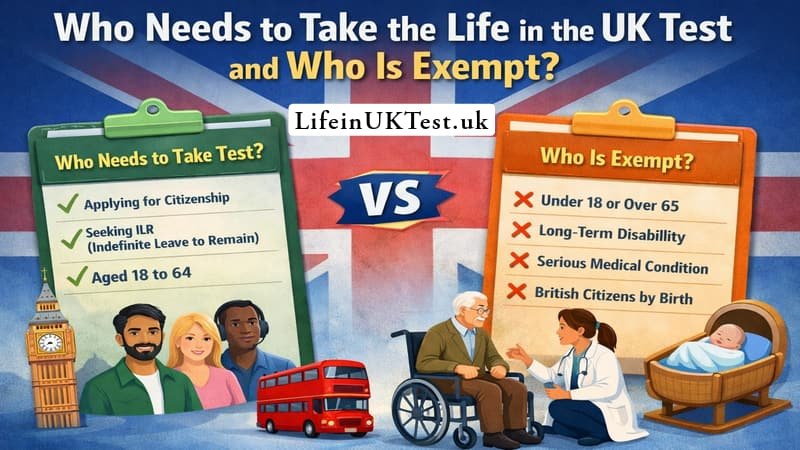
Who Needs to Take the Life in the UK Test and Who Is Exempt is a common question for people applying for British citizenship or settlement in the UK. The Life in the UK Test is a mandatory requirement for many applicants, but not everyone needs to take it. Depending on your age, immigration status, or specific circumstances, you may qualify for an exemption. This article explains who must take the test, who is exempt, and how to check whether the requirement applies to you.
Who Needs to Take the Life in the UK Test and Who Is Exempt: Your Complete Guide
Let me be honest with you—figuring out whether you need to take the Life in the UK test can feel like navigating a maze blindfolded. I’ve seen countless people stress over this, only to discover they were exempt all along, or vice versa. So let’s cut through the confusion and get you the answers you actually need.
What Exactly Is This Test Anyway?
Before we dive into who needs it, let’s talk about what we’re dealing with here. The Life in the UK test is basically the UK government’s way of making sure you understand British history, culture, and values before granting you citizenship or permanent residence. It’s 45 minutes long, consists of 24 multiple-choice questions, and you need to score at least 75% (18 correct answers) to pass.
The questions cover everything from the Magna Carta to how the Welsh Assembly works—honestly, some British citizens couldn’t pass this test if their lives depended on it. But that’s a conversation for another day.
Who Actually Needs to Take This Test?
Here’s where things get practical. You’ll need to sit this test if you’re applying for:
Indefinite Leave to Remain (ILR) / Settlement
This is the big one. If you’re looking to settle permanently in the UK, the Life in the UK test is almost certainly in your future. This applies whether you’ve been here on a work visa, spouse visa, or most other long-term visa categories.
British Citizenship (Naturalization)
Want that burgundy passport? (Well, it’s actually blue now, but you get the point.) Then yes, you’ll need to prove you know your stuff about British life. This applies to adults between 18 and 65 years old.
Now, let’s be specific about the situations:
- Work visa holders moving to ILR—you’re taking the test
- Spouse or partner visa holders seeking settlement—test required
- Long residence applications (been here 10+ years)—still need it
- Skilled Worker route to settlement—test is mandatory
- Ancestry visa holders applying for ILR—you’re not getting out of this one
Who Gets a Free Pass? (The Exemptions)
Alright, here’s the good news section. Some people genuinely don’t need to take this test, and if you fall into one of these categories, you can breathe a sigh of relief.
Age Exemptions
Under 18 or Over 65
If you’re younger than 18 or older than 65 at the time of your application, you’re automatically exempt. No test, no stress. The government figures if you’re outside this age range, the requirement doesn’t apply to you.
Medical and Physical Exemptions
This is where things get compassionate, and honestly, it’s one of the better aspects of the system.
Long-term Physical or Mental Condition
If you have a condition that prevents you from taking the test, you can apply for an exemption. We’re talking about:
- Severe learning difficulties
- Long-term physical disabilities that make sitting the test impossible
- Mental health conditions that would make the test unreasonably difficult
- Progressive conditions like advanced dementia
Here’s what you need to know: You can’t just claim this—you need solid medical evidence. Your doctor will need to complete a specific form (it’s currently form “AN” for naturalization or “SET(O)” for settlement applications, but always check the latest requirements). The documentation needs to clearly explain why you cannot reasonably be expected to take or pass the test.
A quick heads-up from experience: vague letters don’t cut it. Your medical professional needs to be specific about your condition and how it prevents you from meeting the test requirements. I’ve seen applications delayed because the medical evidence wasn’t detailed enough.
Already Passed? You’re Sorted
Once you’ve passed the Life in the UK test, that result is valid forever for UK immigration purposes. So if you took it years ago for ILR and now you’re applying for citizenship—good news, you don’t need to take it again. Just dig out that pass notification letter (you did keep it somewhere safe, right?).
Special Categories and Common Confusions
Let’s tackle some situations that trip people up:
EU Settlement Scheme Applicants
Here’s something that surprises people: if you’re applying under the EU Settlement Scheme (EUSS) for settled or pre-settled status, you don’t need the Life in the UK test. Not now, not ever, not for that application. It’s a completely separate immigration route.
However—and this is important—if you later want to apply for British citizenship through naturalization (not all EUSS holders will), then you’ll need to take the test at that point.
British Overseas Territories Citizens
If you’re a British Overseas Territories Citizen (BOTC) applying to register as a British citizen, you’re typically exempt from both the test and the English language requirement. The reasoning? You’re already British in a sense, just from a different territory.
Refugees and Those with Humanitarian Protection
If you’ve been granted refugee status or humanitarian protection in the UK, you still need to take the Life in the UK test when applying for settlement. I know this surprises some people who assume their circumstances might grant an exemption, but the requirement stands unless you meet one of the specific exemption criteria (like age or medical conditions).
The English Language Requirement Connection
Let’s clear up some confusion because people often mix these up: the Life in the UK test is not the same as proving your English language ability, though both are usually required together.
For most settlement and citizenship applications, you need:
- Proof of English language skills (usually a B1 level test for settlement, B2 for citizenship, or a qualifying degree taught in English)
- AND the Life in the UK test
Some people are exempt from English language requirements but not the Life in the UK test, and vice versa. For example, being from a majority English-speaking country exempts you from English testing but not from the Life in the UK test.
When You Don’t Need It: Other Visa Routes
Just so we’re crystal clear, you don’t need this test for:
- Tourist visas (obviously)
- Student visas
- Youth Mobility Scheme visas
- Initial spouse/partner visa applications (only needed later for settlement)
- Tier 5 temporary worker visas
- Most temporary work visas at the initial application stage
Basically, if you’re coming temporarily, you’re off the hook. It’s only when you want to stay permanently that this requirement kicks in.
Quick Reference Table: Who Needs the Test?
| Application Type | Life in the UK Test Required? | Notes |
|---|---|---|
| ILR/Settlement (work visa route) | Yes (18-65 age group) | Must pass before applying |
| ILR/Settlement (spouse/partner) | Yes (18-65 age group) | Required at settlement stage, not initial visa |
| British Citizenship | Yes (18-65 age group) | Unless already passed for earlier application |
| EU Settlement Scheme | No | Separate route with different requirements |
| Student visa | No | Not a settlement route |
| Visitor visa | No | Temporary stay only |
| Applicants under 18 | No | Age exemption applies |
| Applicants over 65 | No | Age exemption applies |
| Those with qualifying medical conditions | No | With proper medical evidence |
Common Mistakes People Make
Let me save you some headaches by highlighting the mistakes I see repeatedly:
Assuming EU citizenship means automatic exemption: Unless you’re applying under EUSS specifically, being European doesn’t exempt you from the test if you’re going through standard settlement routes.
Thinking good English skills mean you’re exempt: Nope. Even if you’ve lived here for 20 years and speak perfect English, if you’re between 18-65 and don’t have a medical exemption, you’re taking the test.
Self-diagnosing medical exemptions: You can’t just decide you qualify. You need proper medical documentation from a qualified professional, and even then, it’s up to the Home Office to accept it.
Waiting until the last minute: Book your test slot as soon as you start preparing. Test centers fill up quickly, especially in major cities, and you don’t want your settlement application delayed because you can’t get a test appointment.
Practical Tips If You Need to Take It
Alright, so you’ve determined you need this test. Here’s some genuine advice:
Get the official handbook: There’s an official “Life in the United Kingdom: A Guide for New Residents” handbook. Buy it, read it, and understand it. Don’t rely solely on third-party study materials.
Use practice tests strategically: Free practice tests online are helpful, but treat them as supplements, not replacements for actually studying the material. The real test questions are different from most practice ones.
Book early: Test slots can be scarce. Go to the official website (gov.uk/life-in-the-uk-test) to find test centers and book. You’ll pay £50 for the test.
Keep your pass certificate safe: Seriously, treat it like a vital document. You’ll need the original for your application, and while you can request a duplicate if you lose it, it’s hassle you don’t need.
Where to Get Official Information
Don’t rely solely on forum posts or unofficial websites (yes, I see the irony here). For definitive answers:
Official UK Government site: gov.uk/life-in-the-uk-test
This is your primary source for booking tests and official requirements.
UK Visas and Immigration guidance: gov.uk/browse/visas-immigration/settle-in-the-uk
Detailed guidance on settlement requirements.
British citizenship applications: gov.uk/apply-citizenship-indefinite-leave-to-remain
Specific information about naturalization requirements.
The Bottom Line
Here’s what you need to remember: If you’re between 18 and 65 and applying for settlement or citizenship through standard routes, plan on taking the Life in the UK test unless you have a legitimate medical reason that prevents it. Age gets you out of it, and certain medical conditions do too, but beyond that, most people going for permanent status will face those 24 questions.
The good news? It’s passable with proper preparation. Most people who fail do so because they didn’t study adequately, not because the test is impossibly difficult. Give yourself a few weeks to go through the material properly, take some practice tests, and you’ll likely be fine.
And honestly, once you’ve passed it, that’s one permanent box ticked off your immigration journey. The pass never expires, so whether you’re using it for ILR now or citizenship later, you’re sorted.
If you’re still genuinely unsure whether you need to take the test based on your specific circumstances, it’s worth getting proper immigration advice. Complex cases—especially those involving medical exemptions or unusual visa histories—benefit from professional guidance. But for most straightforward applications, the rules I’ve outlined here should point you in the right direction.
Good luck with your application journey. You’ve got this!